

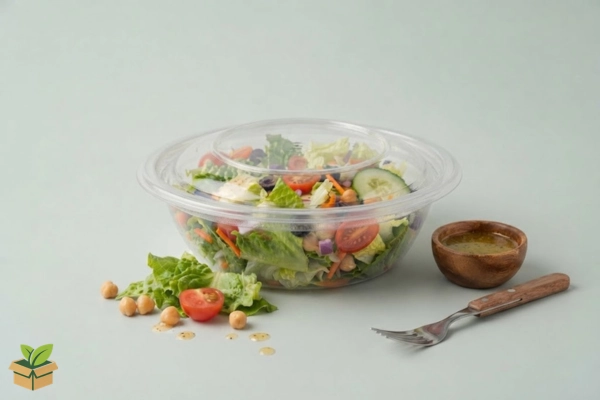
🥗 Salad Bowl Packaging: How to Keep Salads Fresh Longer
Introduction: Why Your Salad Goes Bad Before You Even Open It
You spent time washing, chopping, and assembling the perfect salad. You packed it up, popped it in the fridge — and a few hours later, it’s a soggy, wilted mess. Sound familiar?
The problem isn’t your salad. The problem is your packaging.
Salad bowl packaging is one of the most underestimated factors in food freshness. Whether you’re a restaurant owner preparing takeaway orders, a meal-prep enthusiast, or a food business scaling up production — the right salad packaging solutions can be the difference between a crisp, vibrant salad and a limp, unappetizing one.
In this guide, we’ll break down everything you need to know about how to keep salads fresh longer — from choosing the right container materials to understanding advanced food freshness preservation techniques used by the pros.
Let’s dig in. 🥬
🥡 Why Salad Packaging Matters More Than You Think
Most people focus on the salad ingredients — the freshness of the greens, the quality of the dressing. But here’s the truth: even the freshest ingredients will deteriorate quickly in the wrong container.
Salad greens are living, breathing produce. After being cut, they continue to respire — releasing moisture and gases that, when trapped in the wrong packaging, accelerate wilting, browning, and bacterial growth.
Here’s what happens inside a poorly chosen container:
- Excess moisture builds up, making greens soggy
- Ethylene gas (released by some vegetables) speeds up ripening and decay
- Oxygen exposure causes oxidation and browning
- Temperature fluctuation breaks down cell walls, causing limpness
The right fresh salad packaging addresses all four of these issues simultaneously. That’s why choosing your salad container is not just a logistical decision — it’s a food science decision.
🔬 The Science Behind Keeping Salads Fresh in Packaging
Before we jump into product recommendations, it helps to understand why certain packaging works better than others. Here’s a quick science breakdown:
Respiration & Moisture Control
Cut vegetables respire — they take in oxygen and release carbon dioxide and water vapor. In a sealed container with no ventilation, this moisture has nowhere to go, creating a humid microenvironment that promotes bacterial growth and wilting.
Breathable packaging film or containers with micro-perforations allow this moisture to escape while maintaining enough humidity to prevent drying out. It’s a delicate balance — and it’s exactly what professional moisture control packaging is designed to achieve.
Modified Atmosphere Packaging (MAP)
This is the gold standard used by large-scale food producers for ready-to-eat salad packaging. Modified Atmosphere Packaging (MAP) works by replacing the air inside the package with a controlled gas mixture — typically higher CO₂ and lower O₂ levels — to slow down respiration and microbial growth.
The result? Salad shelf life can be extended from 2–3 days to 7–14 days without preservatives.
Oxygen Barrier Packaging
For pre-packaged salads in retail settings, oxygen barrier packaging prevents oxidation — the main cause of browning in cut lettuce and other leafy greens. This is why store-bought salad bags often use multi-layer films with oxygen-blocking properties.
Cold Chain Packaging
No packaging works in isolation. Cold chain packaging — maintaining consistent refrigeration from production to consumption — is equally critical. Even the best container won’t keep salad fresh if it’s sitting at room temperature for hours.
📦 Best Packaging Materials for Salad Bowls
Now let’s get practical. Here’s a breakdown of the most common salad packaging materials and how they perform:
1. PET Plastic (Clear Plastic Salad Bowls)
PET (Polyethylene Terephthalate) is the most widely used material for salad containers. It’s crystal clear, lightweight, food-safe, and provides excellent visibility of the product inside.
Why it works:
- High clarity shows off fresh, colorful salads
- Rigid structure protects ingredients from crushing
- Can be made with anti-fog properties to prevent condensation on the lid
- Recyclable
Best for: Retail salad packaging, restaurant takeaway, deli counters
If you’re looking for a reliable option, the Black Salad Round Bowl with Clear Lid is a popular choice that combines a sleek black base with a crystal-clear lid — giving your salad a premium presentation while maintaining visibility.
For a fully transparent option, the Transparent Salad Bowls – Clear Plastic Bowl with Lid offers excellent clarity and a secure seal, making it ideal for both display and delivery.
2. CPET (Crystallized PET Trays)
CPET salad trays are a more rigid, heat-resistant version of PET. They’re commonly used in ready-to-eat meal packaging and can withstand both refrigeration and microwave heating — making them versatile for meal-prep businesses.
Best for: Ready-to-eat meals, meal-prep delivery services
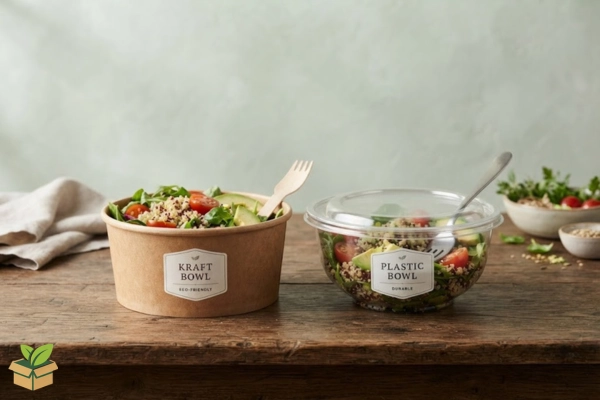
3. Kraft Paper Bowls (Eco-Friendly Option)
For businesses prioritizing sustainability, kraft paper salad bowls are an excellent alternative. Made from food-grade kraft paper with a PE or PLA lining, they’re sturdy, compostable, and give your brand a natural, eco-conscious aesthetic.
The 1300ml Round Kraft Bowl, 1000ml Round Kraft Bowl, 750ml Round Kraft Bowl, and 500ml Round Kraft Bowl are all excellent options for serving fresh salads, grain bowls, and mixed greens in an eco-friendly format.
If you prefer kraft bowls with lids for better freshness retention, the 750ml Kraft Bowl with Lid and 1000ml Kraft Bowl with Lid are food-grade options that seal in freshness while staying environmentally responsible.
Best for: Eco-conscious restaurants, food trucks, catering
4. Hinged Deli Containers (Clamshell Food Containers)
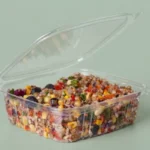
Clamshell food containers — also called hinged deli boxes — are one of the most practical options for takeaway salad packaging. They open and close easily, provide a secure seal, and are available in multiple sizes.
The 6oz, 8oz, 12oz, 16oz, 20oz, 24oz, 28oz, and 32oz Hinged Deli Boxes offer a full range of sizes to suit everything from a small side salad to a large family portion.
Best for: Deli counters, cafes, salad bars, food delivery
5. Compartment Trays with Clear Lids
For salads with multiple components — like a protein, greens, toppings, and dressing served separately — compartment trays are a game-changer. They keep ingredients separated until serving time, which is one of the best ways to prevent sogginess.
The 3-Compartment Black Plastic Tray with Clear Lid and Round 3-Compartment Black Disposable Tray with Clear Lid are perfect for this purpose — keeping dressing away from greens until the customer is ready to eat.
Best for: Meal-prep boxes, restaurant delivery, catering platters
🌿 Eco-Friendly Salad Packaging: Does It Actually Work?
A common concern among food businesses is whether eco-friendly salad packaging can actually maintain freshness as well as conventional plastic. The short answer: yes — when chosen correctly.
Here’s what makes sustainable packaging effective for salads:
- PLA-lined kraft bowls provide moisture resistance comparable to plastic
- Compostable lids with tight seals maintain humidity control
- Biodegradable food containers made from sugarcane or bamboo fiber are naturally breathable
The Compostable 3-Compartment Biodegradable Disposable Plates are a great example of sustainable packaging that doesn’t compromise on functionality. They’re ideal for serving fresh salads at events, catering setups, or eco-conscious restaurants.
Switching to sustainable produce packaging also has a direct business benefit: consumers increasingly prefer brands that use environmentally responsible packaging. It’s not just good for the planet — it’s good for your bottom line.
🏪 Salad Packaging for Restaurants & Food Businesses
If you’re running a restaurant, cloud kitchen, or food delivery service, your salad packaging for restaurants needs to tick multiple boxes:
✅ Maintains freshness during transit ✅ Looks attractive and professional ✅ Prevents leaks and spills ✅ Keeps dressing separate until serving ✅ Is cost-effective at scale
Here’s a practical setup that works:
| Use Case | Recommended Packaging | Key Benefit |
|---|---|---|
| Single-serve takeaway salad | Clear hinged deli box (16oz–24oz) | Easy open/close, great visibility |
| Large portion / sharing salad | Transparent salad bowl with lid | Secure seal, premium presentation |
| Multi-component meal prep | 3-compartment tray with clear lid | Keeps ingredients separated |
| Eco-conscious restaurant | Kraft bowl with lid | Sustainable, food-grade, compostable |
| Salad delivery | Airtight clear plastic bowl | Leak-proof, freshness-preserving |
For salad packaging design, clear containers are almost always the best choice — customers eat with their eyes first, and being able to see a vibrant, colorful salad through the packaging is a powerful selling point.
You can explore the full range of salad bowl options at the Salad Bowls Category on EcoPackaging.pk.
💡 Practical Tips: How to Keep Salad Fresh in a Container
Beyond choosing the right packaging, here are proven techniques to maximize salad freshness:
1. Keep Dressing Separate
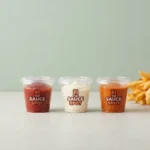
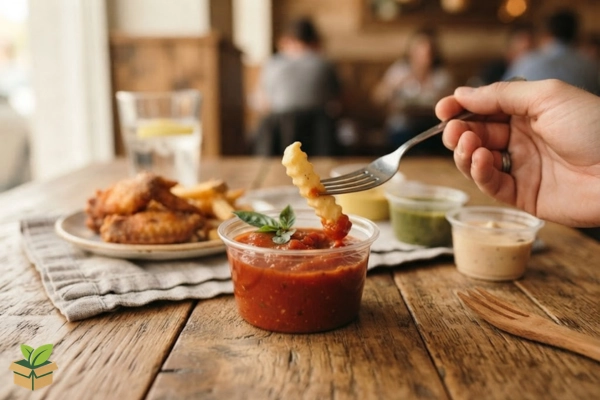
This is the single most effective tip. Dressing breaks down cell walls and causes wilting within minutes. Always pack dressing in a separate dip sauce container or dip sauce container with attached lid and let the customer add it themselves.
2. Dry Your Greens Thoroughly
Excess moisture on salad leaves accelerates decay. Spin or pat dry all greens before packing. Even a small amount of residual water can create a humid environment that promotes bacterial growth.
3. Layer Strategically
Pack heavier, moisture-releasing ingredients (tomatoes, cucumbers) at the bottom and delicate greens on top. This prevents the greens from getting crushed or waterlogged.
4. Use the Right Container Size
An oversized container leaves too much air space, which accelerates oxidation. Choose a container that fits your salad snugly — or use a resealable salad packaging option that allows you to remove excess air.
5. Refrigerate Immediately
This sounds obvious, but it’s critical. Salad greens should be packed and refrigerated within 30 minutes of preparation. Consistent cold chain packaging is non-negotiable for maintaining freshness.
6. Use Anti-Fog Lids
If you’re displaying salads in a refrigerated case, anti-fog packaging film or anti-fog lids prevent condensation from obscuring the product — keeping it visually appealing and fresh-looking.
7. Add a Paper Towel Layer
For meal-prep containers, placing a folded paper towel or butter paper inside the container absorbs excess moisture and significantly extends salad crispness.
📊 How Long Does Packaged Salad Stay Fresh?
Freshness duration depends heavily on packaging type, storage temperature, and ingredients. Here’s a general guide:
| Packaging Type | Storage Temp | Estimated Freshness |
|---|---|---|
| Standard airtight plastic bowl | 2–4°C | 2–3 days |
| Breathable/vented container | 2–4°C | 3–5 days |
| MAP (Modified Atmosphere) packaging | 2–4°C | 7–14 days |
| Kraft bowl with lid | 2–4°C | 1–2 days |
| Compartment tray (dressing separate) | 2–4°C | 3–4 days |
Note: These are general estimates. Actual shelf life varies based on ingredient type, hygiene practices, and storage conditions.
🌱 The Future of Salad Bowl Packaging
The packaging industry is evolving rapidly, and salad packaging solutions are no exception. Here are the trends shaping the future:
- Active packaging — containers embedded with antimicrobial agents or oxygen absorbers that actively extend shelf life
- Smart packaging — QR codes and freshness indicators that tell consumers exactly how fresh their salad is
- Fully compostable MAP packaging — combining the shelf-life benefits of modified atmosphere technology with biodegradable materials
- Edible packaging — still in early stages, but some companies are experimenting with edible coatings for fresh produce
For businesses in Pakistan and across South Asia, the shift toward sustainable produce packaging is already well underway — and consumers are rewarding brands that make the switch.
✅ Conclusion: The Right Packaging Is Your Freshness Strategy
Keeping salads fresh isn’t just about the ingredients — it’s about the entire system: the container material, the seal quality, the moisture management, the temperature control, and the packaging design.
Whether you’re a home cook meal-prepping for the week, a restaurant owner scaling up your delivery game, or a food brand looking to extend salad shelf life packaging, the principles are the same: choose food-safe, appropriately sized, well-sealed containers — and keep dressing separate.
The good news? You don’t need expensive industrial equipment to get this right. The right salad bowl packaging is accessible, affordable, and available right now.
Explore the full range of salad bowls and food containers at EcoPackaging.pk — Pakistan’s trusted source for food-grade, eco-friendly, and restaurant-quality packaging solutions.
📣 Call to Action
Ready to upgrade your salad packaging? Browse our complete collection of salad bowls, kraft bowls, deli containers, and eco food packaging at EcoPackaging.pk — and give your salads the packaging they deserve. 🥗

















(0) Comments