

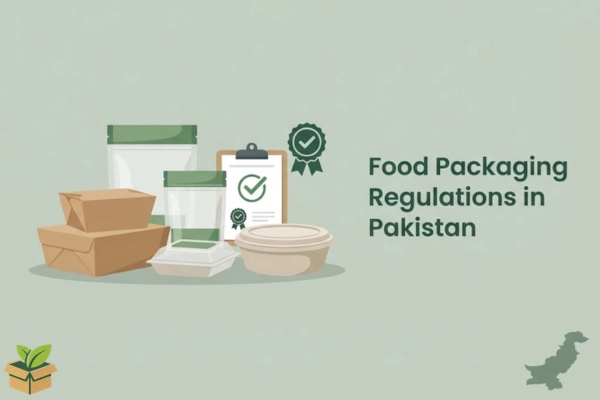
Food Packaging Regulations in Pakistan: What You Must Know
If you’re running a food business in Pakistan — whether it’s a bakery, restaurant, or a growing FMCG brand — understanding Food Packaging Regulations in Pakistan isn’t optional anymore. It’s the difference between a product that sails through customs and shelves smoothly, and one that gets flagged, fined, or pulled off the market. As consumer awareness grows and regulatory bodies tighten enforcement, packaging has quietly become one of the most scrutinized parts of the food supply chain.
This guide breaks down exactly what the law requires, who enforces it, and how you can keep your packaging fully compliant without slowing down your business.
🏛️ The Regulatory Bodies Behind Food Packaging Laws in Pakistan
Pakistan doesn’t have a single, centralized authority overseeing all food packaging. Instead, responsibility is shared across federal and provincial bodies, which can make compliance feel a bit fragmented if you’re not familiar with the system.
At the federal level, the Ministry of National Food Security & Research sets broad policy direction, while the Pakistan Standards and Quality Control Authority (PSQCA) develops and enforces technical standards for food packaging materials, hygiene, and safety. PSQCA food packaging rules cover everything from the type of plastic permitted in food contact materials to the structural integrity required for transport packaging.
Provincial authorities then take over on-ground enforcement. The Punjab Food Authority (PFA) and Sindh Food Authority (SFA) conduct inspections, issue licenses, and penalize non-compliant businesses within their jurisdictions. If you’re distributing across provinces, this means your packaging needs to satisfy multiple layers of oversight simultaneously — a detail many new businesses overlook until an inspection catches them off guard.
For businesses just starting to map out their packaging strategy, our complete guide to food packaging in Pakistan is a useful starting point before diving into the regulatory specifics.
📜 Core Food Packaging Standards You Need to Know
Beyond who regulates packaging, the more practical question is what exactly they’re regulating. Pakistan food packaging standards generally fall into three categories: material safety, structural hygiene, and consumer protection.
Material safety rules dictate which substances are approved for direct food contact. Packaging materials regulations in Pakistan increasingly restrict certain plastics and additives that can leach into food, particularly in hot or oily products. This is why many restaurants and food brands are shifting toward safer, food-grade alternatives — a transition we cover in detail in our piece on choosing food-grade plastic containers in Pakistan.
Hygiene standards, meanwhile, govern how packaging is manufactured, stored, and handled before it ever touches your product. Packaging hygiene standards require facilities to maintain contamination-free environments, particularly for packaging used in dairy, meat, and ready-to-eat food segments.
Finally, consumer protection food packaging rules ensure that packaging doesn’t mislead buyers about quantity, quality, or contents. Together, these three pillars form the backbone of food safety packaging laws in the country — and ignoring any one of them puts your business at compliance risk.
🏷️ Food Labeling Regulations: What Must Appear on Every Pack
Labeling is where most businesses unintentionally fall short — not because they’re careless, but because labeling requirements are more detailed than they appear on the surface.
Under current food labeling regulations in Pakistan, every packaged food product must clearly display a nutritional facts panel, listing calories, fats, proteins, and key micronutrients where applicable. This isn’t just a formality; it’s increasingly checked during retail audits, especially for packaged snacks and beverages.
Equally critical is shelf life and expiry date labeling. Products without a clearly printed manufacturing and expiry date are among the most common reasons for market seizure. If you’re packaging perishable goods like Zam Zam water or bottled beverages, our guide on labeling Zam Zam water bottles walks through exactly how compliant labeling should look in practice.
For products marketed to the broader Muslim consumer base, halal certification packaging has also become a near-standard expectation rather than a bonus feature. Displaying verified halal certification builds trust and, in many retail chains, is now a prerequisite for shelf placement.
Here’s the practical takeaway: labeling isn’t just a legal checkbox — it directly shapes consumer trust and purchase decisions, which is exactly why it deserves careful attention during your packaging design phase.
♻️ Plastic Packaging Rules and the Shift Toward Biodegradable Materials
Few areas of food packaging regulation have moved as fast as plastic policy. Over the past few years, various provincial governments have introduced restrictions targeting single-use plastic bags and certain thin-gauge plastic packaging formats, part of a broader plastic packaging ban in Pakistan aimed at reducing environmental waste.
For food businesses, this shift isn’t just regulatory pressure — it’s also a market opportunity. Consumers are actively seeking brands that use biodegradable packaging in Pakistan, and retailers are beginning to favor suppliers who can demonstrate environmental compliance. If you’re evaluating whether to make the switch, our detailed comparison of biodegradable vs compostable packaging explains the practical differences and which option fits different food categories best.
Many businesses that transition early also see a genuine competitive advantage. Our article on sustainable food packaging in Pakistan explores why this shift matters beyond just regulatory compliance — touching on brand perception, export competitiveness, and long-term cost savings.
If budget concerns are holding you back from switching, it’s worth reading how to switch to eco packaging without hurting your margins, since the transition is often more affordable than businesses initially assume.
🌍 Import and Export Compliance for Food Packaging
If your business involves importing raw packaging materials or exporting finished food products, an entirely separate layer of rules comes into play. Import/export food packaging rules require documentation proving material safety, often aligned with international standards like ISO or codex-based benchmarks, especially for products headed to markets in the Gulf, Europe, or North America.
Exporters frequently underestimate how strict destination-market packaging requirements can be. A product perfectly compliant for domestic sale in Pakistan may still get rejected at a foreign port simply because the packaging material specifications don’t match the importing country’s food contact material regulations. This makes early consultation with PSQCA-approved testing labs a smart move before finalizing packaging design for export-bound products.
On the import side, businesses bringing in packaging materials — such as specialty pouches, foils, or coatings — must ensure these materials carry proper certification proving they meet Pakistan’s food contact material safety thresholds before customs clearance.
✅ How Businesses Can Stay Fully Compliant
Staying compliant doesn’t require a legal department — it requires a structured, proactive approach. Most businesses that run into trouble aren’t deliberately cutting corners; they simply haven’t built compliance into their packaging workflow from day one.
Start by identifying which regulatory body governs your specific product category and province, since PFA and SFA requirements can differ slightly in enforcement focus. From there, work backward from your packaging design: does it include accurate nutritional information, clear expiry dating, and food-safe material certification?
A few areas deserve particular attention:
- Verify that your packaging supplier can provide material safety documentation on request
- Review labeling templates against current PSQCA and provincial food authority guidelines
- Reassess plastic components in your packaging line against current environmental restrictions
Choosing the right packaging partner makes this entire process considerably smoother. Our guide on how to choose the right packaging supplier in Pakistan covers exactly what to look for when vetting vendors for long-term compliance reliability.
⚠️ Common Compliance Mistakes That Cost Businesses
Even well-intentioned businesses stumble on the same handful of issues repeatedly. Missing or faded expiry dates remain one of the most common triggers for retail rejection, particularly with smaller bakeries and home-based food brands scaling up production. Another frequent misstep is using packaging materials that haven’t been verified for food-grade safety, often because a supplier offered a cheaper alternative without disclosing material composition.
Inconsistent labeling across product batches also raises red flags during inspections, as does the assumption that provincial rules mirror each other exactly — they often don’t. The safest approach is treating compliance as an ongoing process rather than a one-time setup task, since regulations here continue evolving alongside environmental and consumer protection priorities.
📊 Quick Reference: Regulatory Bodies at a Glance
| Authority | Primary Focus | Jurisdiction |
|---|---|---|
| PSQCA | Material safety, technical packaging standards | National |
| Punjab Food Authority (PFA) | Licensing, inspections, enforcement | Punjab |
| Sindh Food Authority (SFA) | Licensing, inspections, enforcement | Sindh |
| Ministry of National Food Security & Research | Policy direction, trade compliance | National |
This table highlights just how layered oversight can get — which is exactly why businesses operating across multiple provinces need packaging that satisfies the strictest applicable standard, not just the minimum requirement in one region.
🔮 The Future of Food Packaging Regulations in Pakistan
Looking ahead, expect tighter enforcement around plastic packaging waste management and stronger push toward environmental packaging laws, particularly as export markets demand greener credentials from Pakistani suppliers. Digital traceability — QR-coded batch and expiry information — is also gaining traction as a natural next step in labeling requirements.
Businesses that get ahead of this curve now, rather than reacting to it later, will have a real head start. Tracking current packaging trends in Pakistan is a practical way to stay aligned with where regulation — and consumer expectation — is heading next.
🎯 Final Thoughts
Navigating Food Packaging Regulations in Pakistan might feel overwhelming at first glance, but once broken down, it comes down to three consistent priorities: safe materials, accurate labeling, and environmental responsibility. Businesses that build these principles into their packaging strategy early don’t just avoid penalties — they build genuine consumer trust, something no regulation can force but every brand desperately needs.
If you’re ready to make your packaging fully compliant and market-ready, explore our range of eco-friendly and food-safe packaging solutions designed specifically for Pakistani food businesses navigating exactly these standards.
❓ Frequently Asked Questions
Q1: Who regulates food packaging in Pakistan? Food packaging in Pakistan is regulated jointly by PSQCA at the national level and provincial bodies like the Punjab Food Authority and Sindh Food Authority for enforcement and licensing.
Q2: Is plastic packaging banned in Pakistan? Certain single-use plastics are restricted under provincial bans, though not all plastic packaging is prohibited. Businesses are encouraged to shift toward biodegradable alternatives.
Q3: What must be included on food packaging labels? Labels must include a nutritional facts panel, manufacturing and expiry dates, and, where applicable, halal certification and ingredient listings.
Q4: Do exporters need different packaging compliance? Yes, exported food products must meet the destination country’s packaging material and labeling standards in addition to Pakistan’s domestic requirements.
Q5: How can small food businesses stay compliant affordably? Working with certified packaging suppliers who provide material safety documentation, and using standardized labeling templates, keeps compliance manageable without high costs.




















(0) Comments