

How to Choose the Right Egg Tray for Your Farm (Complete Buyer’s Guide 2026)
🥚 Introduction: Why Your Egg Tray Choice Matters More Than You Think
If you’re running a poultry farm — whether it’s 50 hens or 50,000 — knowing how to choose the right egg tray for your farm is one of the most practical decisions you’ll make. It sounds simple, right? Just grab a tray and stack the eggs. But the reality is, the wrong egg tray can cost you money through breakage, contamination, failed transport, and wasted storage space.
Every year, poultry farmers lose a significant percentage of their egg yield not in the coop — but after collection, during handling, storage, and transportation. The culprit? Poor egg tray selection.
The good news is that choosing the right egg tray for farm use doesn’t have to be complicated. Once you understand the key factors — material, size, capacity, durability, and your farm’s specific needs — the decision becomes straightforward.
This guide walks you through everything: from egg tray types for poultry to a full egg tray material comparison, so you can make a smart, cost-effective choice that protects your eggs from coop to customer.
🧱 Understanding Egg Tray Types for Poultry Farms
Before diving into which tray is “best,” let’s understand what’s actually available in the market. There are four main types of egg trays used on farms today, each with distinct advantages.
1. Pulp Egg Tray (Paper/Cardboard)
The pulp egg tray — also called a paper egg tray or molded fiber tray — is the most widely used option in commercial poultry farming. Made from recycled paper pulp, these trays are:
- Biodegradable and eco-friendly — great for farms with sustainability goals
- Naturally shock-absorbing due to their molded fiber structure
- Lightweight and easy to stack
- Cost-effective when bought in bulk
- Ideal for egg transportation safety over short to medium distances
Downside: They absorb moisture, which can weaken the tray and create hygiene issues in humid environments. They are also single-use in most cases.
2. Plastic Egg Tray
Plastic egg trays are the go-to choice for farms that prioritize durability and reusability. These are hard-molded trays made from HDPE or similar food-grade plastic.
- Washable and reusable — lasting hundreds of cycles
- Resistant to moisture, humidity, and temperature changes
- Excellent egg tray stackability for warehouse and cold storage
- Available in multiple sizes (6, 12, 15, 30 egg configurations)
- Higher upfront cost but lower long-term cost per use
If you’re looking for durable egg trays for farm operations that run year-round, plastic is often the smarter investment.
3. Foam Egg Tray
Foam egg trays offer superior cushioning and are commonly used for retail packaging and premium egg brands. They are lightweight and provide excellent protection against impact.
- Best for retail display and consumer-facing packaging
- Provides excellent insulation for temperature-sensitive eggs
- Not ideal for large-scale farm storage due to cost
- Less eco-friendly compared to pulp or plastic options
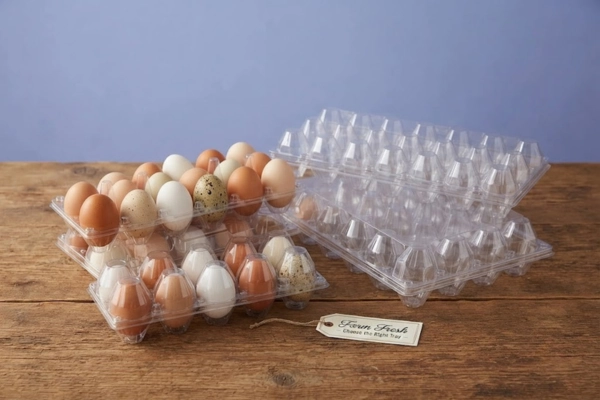
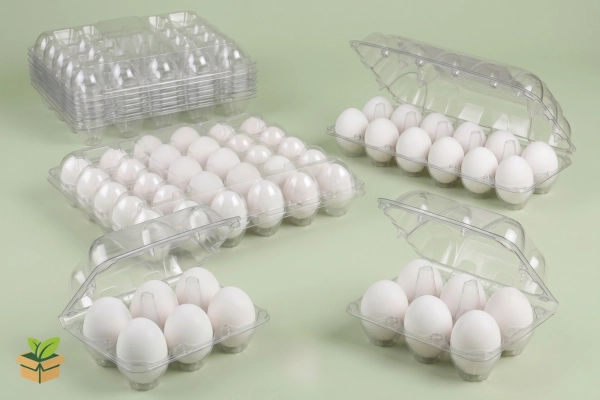
4. Transparent / Clear Plastic Egg Tray
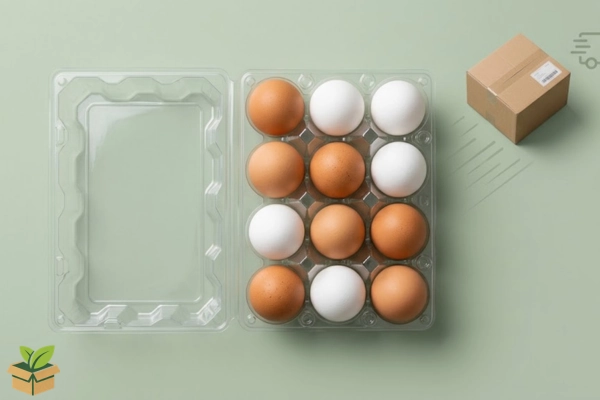
Transparent egg trays are increasingly popular for farm-to-retail and direct-to-consumer egg sales. They allow buyers to visually inspect eggs without opening the tray — a major selling point.
For farms selling directly to customers or local markets, a Krystalite Transparent 12 Egg Tray or Krystalite Transparent 15 Egg Tray offers the perfect blend of visibility, protection, and professional presentation.
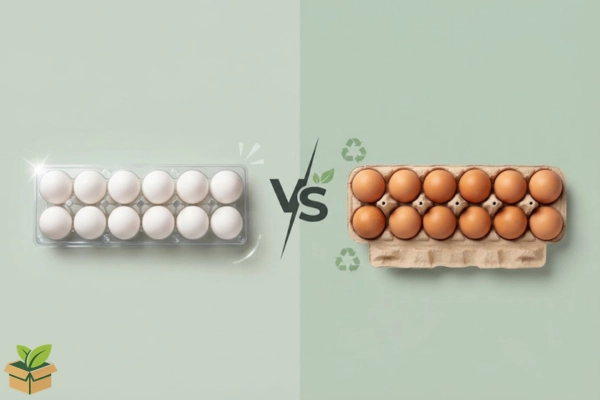
⚖️ Plastic vs Paper Egg Tray: Which One Should You Choose?
This is the most common question in any poultry egg tray buying guide — and the answer depends on your farm’s specific situation. Here’s a clear comparison:
| Feature | Plastic Egg Tray | Paper/Pulp Egg Tray |
|---|---|---|
| Durability | Very High (reusable 200+ times) | Low (single-use) |
| Cost | Higher upfront, lower long-term | Low upfront cost |
| Eco-Friendliness | Moderate (reusable) | High (biodegradable) |
| Moisture Resistance | Excellent | Poor |
| Hygiene | Easy to wash & sanitize | Absorbs bacteria over time |
| Stackability | Excellent | Good |
| Best For | Large farms, cold storage, transport | Small farms, short-distance delivery |
| Bulk Buying Value | High | Very High |
The verdict: For large-scale commercial farms, plastic egg trays win on durability and long-term cost. For small farms or those focused on biodegradable egg packaging, pulp trays are the smarter, greener choice.
📏 Egg Tray Size Guide: What Size Do You Actually Need?
One of the most overlooked aspects of farm egg tray selection is getting the size right. Using the wrong size tray leads to eggs shifting during transport — which means breakage, losses, and frustrated customers.
Standard Egg Tray Capacities
Here’s a quick egg tray size guide based on common farm needs:
| Tray Size | Eggs Per Tray | Best For |
|---|---|---|
| Small Tray | 6 eggs | Home use, small farms, gift packaging |
| Medium Tray | 12 eggs | Small-to-medium farms, retail |
| Standard Tray | 15 eggs | Most common commercial size |
| Large Tray | 30 eggs | Commercial farms, bulk transport |
How Many Eggs Does a Standard Egg Tray Hold?
A standard egg tray typically holds 30 eggs in commercial farming. However, for retail and consumer packaging, 12-egg and 15-egg trays are the most popular formats.
For small-scale operations, the AMS 6 Egg Tray is perfect for home use or boutique egg sales. For medium operations, the AMS 12 Egg Tray offers a balanced capacity. And for high-volume farms, the Krystalite Transparent 30 Egg Tray provides maximum efficiency with full egg visibility.
🐔 How to Choose an Egg Tray Based on Flock Size
Your flock size is one of the most important factors in choosing egg trays for farmers. Here’s a practical breakdown:
Small-Scale Farm (Up to 100 Hens)
- Daily egg yield: 70–90 eggs
- Recommended tray: 6 or 12-egg trays
- Material preference: Transparent plastic or pulp trays
- Reason: Easy to handle, cost-effective, ideal for local market sales
Medium-Scale Farm (100–500 Hens)
- Daily egg yield: 350–450 eggs
- Recommended tray: 12 or 15-egg trays
- Material preference: Plastic reusable trays
- Reason: Balance of cost, hygiene, and reusability
Large Commercial Farm (500+ Hens)
- Daily egg yield: 400–1,000+ eggs
- Recommended tray: 30-egg commercial trays
- Material preference: Durable plastic or molded pulp
- Reason: Maximizes storage efficiency, reduces per-unit cost, supports bulk transport
The key rule: match your tray capacity to your daily collection volume so you’re never over-stacking or under-utilizing your storage space.
🚛 Egg Transportation Safety: How to Prevent Egg Breakage
One of the biggest pain points for poultry farmers is egg breakage during transport. The right tray dramatically reduces this risk. Here’s how:
Tips to Prevent Egg Breakage
- Choose trays with deep cup molding — deeper cups hold eggs more securely and prevent lateral movement
- Use stackable trays — proper egg tray stackability means you can safely stack multiple layers without crushing
- Don’t overfill — always use the correct tray size for your egg grade (small, medium, large, jumbo)
- Secure trays during transport — use crates or boxes that hold trays firmly in place
- Avoid moisture exposure — wet pulp trays lose structural integrity; switch to plastic for humid or long-distance transport
- Inspect trays regularly — cracked or deformed trays should be replaced immediately
For farms that transport eggs frequently, investing in reusable plastic containers with secure stacking mechanisms is the single best way to reduce breakage losses.
🌿 Eco-Friendly Egg Packaging: Is It Worth It?
Sustainability is no longer just a buzzword — it’s a market advantage. Consumers increasingly prefer eggs packaged in biodegradable egg packaging, and many retailers now require it.
Pulp egg trays are the gold standard for eco-conscious farms:
- Made from 100% recycled paper fiber
- Fully compostable and biodegradable
- Carbon footprint significantly lower than plastic
- Accepted by most green certification programs
If your farm markets itself as organic, free-range, or eco-friendly, using pulp or biodegradable trays reinforces that brand message at every touchpoint.
However, if you’re looking for a middle ground — reusable plastic trays used hundreds of times actually have a lower lifetime environmental impact than single-use pulp trays. The most sustainable choice depends on your wash-and-reuse capacity.
💰 How to Buy Egg Trays in Bulk for Poultry Farming
For farms buying at scale, wholesale egg trays for poultry offer significant cost savings. Here’s what to keep in mind:
Smart Bulk Buying Tips
- Calculate your monthly tray consumption before placing a bulk order
- Compare per-unit cost across different tray sizes and materials
- Factor in storage space — bulk pulp trays take up more space than stacked plastic trays
- Check minimum order quantities — most suppliers offer better pricing at higher volumes
- Order a sample batch first — test the tray with your actual egg sizes before committing to thousands of units
- Consider seasonal demand — order more before peak production months
Buying egg storage trays for farm use in bulk not only reduces cost but also ensures you never run short during peak laying seasons.
You can explore the full range of available egg tray options at the Egg Tray Collection — including both AMS and Krystalite variants in multiple sizes.
🐣 Egg Tray for Hatching Eggs: Special Considerations
If you’re using trays for hatching eggs rather than table eggs, the requirements are different:
- Avoid foam or pulp trays — they can harbor bacteria that affect hatch rates
- Use clean, sanitized plastic trays — easier to disinfect between batches
- Ensure proper ventilation — trays used in incubators must allow airflow around each egg
- Store pointed end down — the tray design should support this orientation for optimal embryo development
- Avoid stacking hatching egg trays — pressure can damage developing embryos
For hatchery operations, transparent plastic trays with individual egg cups are the preferred choice, as they allow easy visual inspection without disturbing the eggs.
🔍 What Is the Difference Between Egg Trays and Egg Cartons?
This is a common point of confusion, especially for newer farmers:
| Feature | Egg Tray | Egg Carton |
|---|---|---|
| Primary Use | Farm storage & bulk transport | Retail consumer packaging |
| Capacity | 6 to 30+ eggs | Typically 6 or 12 eggs |
| Design | Open top, stackable | Enclosed, hinged lid |
| Material | Pulp, plastic, foam | Pulp, foam, plastic |
| Branding | Minimal | Often printed/branded |
| Cost | Lower per unit | Higher per unit |
In short: egg trays are for farm-level handling and bulk transport, while egg cartons are for retail presentation. Many farms use both — trays for internal operations and cartons for final consumer packaging.
✅ Quick Checklist: How to Choose the Right Egg Tray for Your Farm
Before you place your next order, run through this checklist:
- Flock size — How many eggs do you collect daily?
- Tray capacity — Do you need 6, 12, 15, or 30-egg trays?
- Material — Plastic for durability or pulp for eco-friendliness?
- Transport distance — Short local delivery or long-distance shipping?
- Storage conditions — Humid environment? Choose plastic over pulp.
- Budget — One-time bulk purchase or ongoing supply?
- End use — Table eggs, hatching eggs, or retail packaging?
- Sustainability goals — Is biodegradable packaging important to your brand?





















(0) Comments