

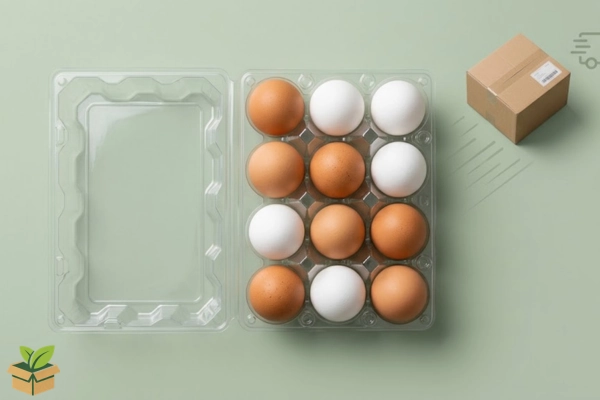
How Egg Trays Protect Eggs During Transport
Every time a carton of eggs travels from a farm to a shop shelf or straight to your kitchen table, it survives a surprising amount of bumping, stacking, and vibration along the way. The reason so few of those eggs crack is simple: egg trays protect eggs during transport by absorbing shock, isolating each shell from its neighbours, and distributing weight evenly across the entire batch. It sounds almost too simple to work, yet this humble piece of molded packaging is one of the most quietly brilliant engineering solutions in the entire food supply chain. In this guide, we’ll unpack exactly how egg trays do their job, what materials make them effective, and how businesses in Pakistan can choose the right tray for their poultry or shipping needs.
🥚 Why Egg Protection During Transport Really Matters
Eggs are one of the most fragile food items sold at scale. A single eggshell can withstand vertical pressure reasonably well, but it has almost no tolerance for sideways impact or sudden jolts. Multiply that vulnerability across dozens, hundreds, or thousands of eggs moving through trucks, warehouses, and delivery bikes, and you start to understand why egg carton protection isn’t a minor detail — it’s the backbone of the entire poultry supply chain.
Without proper packaging, breakage rates during transport can climb dramatically, leading to financial losses for farms, wasted stock for retailers, and a messy, unhygienic problem for everyone involved. This is exactly where safe egg transportation solutions step in, and egg trays sit right at the centre of that solution. Poultry farms across Pakistan have leaned heavily on tray-based systems for this very reason, and if you’re setting up or scaling a farm, it’s worth reading how to choose the right egg tray for your farm before deciding on packaging.
📦 How Egg Trays Protect Eggs During Transport
So how does egg tray packaging actually manage to keep something as delicate as an eggshell intact through hours of road travel? The answer lies in three overlapping design principles: cushioning, isolation, and load distribution.
The Cushioning Effect Explained
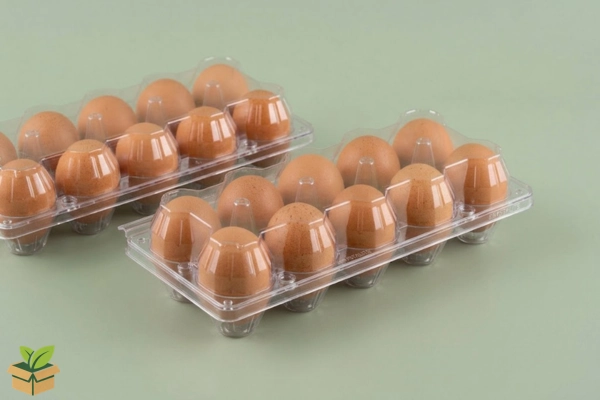
Every egg tray is molded with individual cavities shaped precisely to cradle the curved base of an egg. This isn’t just about aesthetics — the cushioning effect in egg trays comes from the way the material flexes slightly under pressure, absorbing vibration before it reaches the shell. Whether the tray is made from molded pulp or plastic, that flex acts like a mini shock absorber for every single egg, softening the impact of sudden stops, potholes, or rough handling during loading and unloading.
This is essentially the same principle behind shock absorption packaging used in electronics or glassware shipping, just adapted for something far more delicate and far more common on our dinner tables.
Individual Cavities Prevent Contact Damage
Beyond cushioning, the real genius of egg tray design is separation. Each egg sits in its own compartment, completely isolated from the eggs around it. This matters enormously because most egg breakage prevention actually comes down to preventing egg-to-egg contact rather than absorbing external shocks. Two eggs knocking against each other during a bumpy ride is one of the most common causes of cracked shells, and a well-designed tray eliminates that risk entirely by keeping every egg in its own protective pocket.
🧪 Egg Tray Materials: What Makes Them Effective
Not all egg trays are created equal, and the material used plays a massive role in how well the tray performs its protective duties.
Molded Pulp and Recycled Paper Trays
Molded pulp egg trays are made by compressing recycled paper fibers into shape, usually under heat and pressure. These trays are lightweight, naturally breathable, and biodegradable, which makes them a favourite among farms and retailers focused on sustainability. Because the pulp has a slightly porous structure, it also allows for natural airflow around each egg — something we’ll come back to shortly when discussing freshness.
Recycled paper egg cartons have become increasingly popular in Pakistan as more businesses shift toward greener operations. If you want a deeper look at how this shift is playing out nationally, our article on how eco packaging is growing in Pakistan covers the trend in detail.
Plastic Egg Trays vs Paper Trays
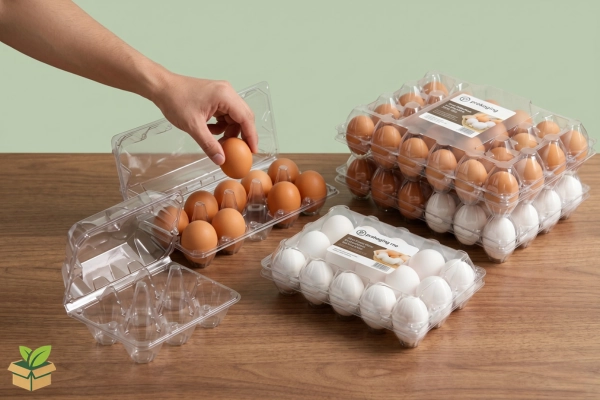
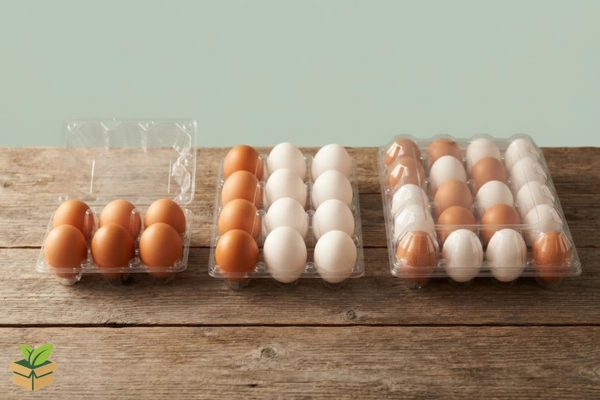
On the other end of the spectrum sit plastic trays, most notably the Krystalite transparent range, which offer a completely different set of advantages. Plastic trays are more rigid, reusable, and often more visually appealing for retail display since customers can see the eggs clearly before purchase.
Choosing between the two isn’t always straightforward, and the right answer usually depends on your business model — farm-to-retail supply chains often prefer paper trays for cost and sustainability, while premium retail brands lean toward plastic for presentation. Our detailed comparison of AMS vs Krystalite egg tray types in Pakistan walks through this decision in far more depth if you’re weighing your options.
🚚 Egg Tray Design Benefits for Shipping and Logistics
Protection during transport isn’t only about what happens to a single egg — it’s about how an entire batch behaves when stacked, loaded, and moved through a logistics chain.
Stacking Strength and Load Distribution
One of the most underrated egg tray design benefits is structural stacking strength. Trays are engineered so that when one tray is placed on top of another, the weight transfers through the tray’s ridges and cavity walls rather than pressing directly down onto the eggs themselves. This is why a properly stacked crate of egg trays can support significant weight from boxes stacked above it without a single egg feeling the pressure.
This stacking design becomes especially important for egg tray for shipping scenarios where trays are packed into larger crates or cartons for long-distance delivery. The uniform shape of each tray also means trucks and delivery vehicles can maximise space efficiency, reducing the number of trips needed and, in turn, reducing the number of times eggs are exposed to handling risk.
Ventilation Holes and Freshness
Many tray designs — particularly molded pulp versions — include small egg tray ventilation holes built into the structure. These aren’t decorative; they allow consistent airflow around each egg, which helps regulate temperature and moisture during transit. Less trapped humidity means a lower chance of bacterial growth and a longer shelf life once the eggs reach their destination.
🌱 Eco-Friendly and Biodegradable Egg Packaging
Sustainability has become a defining factor in how packaging materials are chosen across Pakistan’s food industry, and egg trays are no exception. Biodegradable egg packaging breaks down naturally without leaving behind the long-term plastic waste associated with less eco-conscious alternatives, which is a major reason so many farms and distributors are making the switch.
If your business is exploring this transition, our guide on eco-friendly egg trays in Pakistan breaks down the practical benefits, while our broader piece on biodegradable vs compostable packaging is useful if you’re trying to understand the technical difference between these two often-confused terms.
🏭 A Quick Look at the Egg Tray Manufacturing Process
Understanding the egg tray manufacturing process helps explain why these products perform so consistently well. Molded pulp trays typically start as recycled paper or cardboard, which is pulped into a slurry, poured into shaped molds, and then pressed and dried to form the familiar cavity structure. Plastic trays, by contrast, go through an injection or thermoforming process where heated plastic is shaped into the same protective cavity design but with added rigidity and clarity.
Both processes are engineered with one shared goal: creating a structure strong enough to protect eggs, yet efficient enough to produce at scale without driving up packaging costs for farms and retailers.
📏 Choosing the Right Egg Tray Size and Type
Egg tray shapes and sizes vary considerably depending on the scale of operation and the destination market. Smaller trays holding 6 or 12 eggs are common for retail and household use, while larger 30-egg trays dominate wholesale and farm-to-distributor logistics. Getting this choice right has a direct impact on both cost efficiency and breakage rates, which is why it’s worth reviewing our breakdown of egg tray sizes — 6, 12, or 30, which to choose before placing a bulk order.
Here’s a quick comparison to help frame the decision between the two most common tray types used across Pakistan’s poultry industry:
| Feature | AMS (Paper) Egg Tray | Krystalite (Plastic) Egg Tray |
|---|---|---|
| Material | Molded recycled pulp | Clear PET plastic |
| Biodegradable | Yes | No (but often reusable) |
| Best For | Farm-to-retail, bulk shipping | Retail display, premium branding |
| Ventilation | Naturally breathable | Limited airflow |
| Cost | Generally lower | Slightly higher |
For a deeper dive into either option specifically, our articles on AMS egg tray features and benefits and why Krystalite egg trays are so popular in Pakistan go into far greater technical detail.
❄️ Cold Chain and Long-Distance Egg Transport
For businesses shipping eggs across cities or provinces, cold chain egg transport adds another layer of complexity. Temperature-controlled trucks combined with sturdy, well-ventilated trays help maintain both freshness and structural safety over longer distances. The tray’s rigidity becomes even more important here, since extended travel times mean more opportunities for vibration-related stress to build up across a stacked shipment.
This is closely related to broader shipping challenges faced across Pakistan’s e-commerce and logistics sectors — many of the same packing principles apply whether you’re moving eggs or any other fragile product. Our guide on how to pack fragile items for shipping in Pakistan offers useful crossover insights if your business handles multiple product categories.
✅ Best Practices for Safe Egg Transportation
A well-designed tray is only half the equation — how it’s used matters just as much. Keep these practical points in mind:
- Always fill trays completely; half-empty cavities allow eggs to shift and collide.
- Stack crates according to manufacturer weight limits rather than guessing.
- Store trays in a cool, dry environment before loading to prevent material weakening.
- Inspect trays for cracks or soft spots before reuse, especially with plastic versions.
- Choose ventilated tray designs for longer transit times to reduce moisture buildup.
Following these habits alongside quality egg packaging solutions dramatically reduces breakage rates and keeps overall logistics costs under control.
💡 Final Thoughts
At the end of the day, the quiet effectiveness of egg trays comes down to smart, simple engineering — cushioned cavities, isolated compartments, and stackable structures working together to solve a genuinely tricky packaging problem. Whether you’re running a poultry farm, managing retail distribution, or simply curious about the packaging behind your breakfast, understanding how egg trays protect eggs during transport reveals just how much thoughtful design goes into something most people never think twice about.
If you’re ready to upgrade your packaging setup, explore our full range of AMS and Krystalite egg trays built specifically for Pakistan’s farms, retailers, and distributors, and get in touch with our team to find the right size and material for your business.
❓ Frequently Asked Questions
Why do egg trays prevent breakage? Egg trays prevent breakage by isolating each egg in its own molded cavity, which stops egg-to-egg contact and absorbs shock through the flexible tray material during movement.
What material is used in egg trays? Most egg trays are made from either molded recycled paper pulp (biodegradable and breathable) or clear plastic like PET, each offering different levels of rigidity, cost, and presentation.
How does egg tray design reduce damage during shipping? The cavity shape cushions each egg individually, while the stacking structure transfers weight through the tray’s walls rather than directly onto the eggs, protecting them from crushing pressure.
What are the main benefits of using egg trays for shipping? Egg trays reduce breakage rates, improve stacking efficiency, allow better airflow for freshness, and make handling and counting eggs significantly easier for farms and retailers.
What is the best egg tray for transport over long distances? For long-distance or cold chain transport, ventilated molded pulp trays are generally preferred since they combine strong cushioning with airflow that helps maintain freshness.
What’s the difference between paper and plastic egg trays? Paper trays are biodegradable, breathable, and cost-effective, while plastic trays are more rigid, reusable, and often chosen for retail display due to their transparent, premium appearance.
How should eggs be packed safely for delivery? Eggs should be packed in fully filled trays with no empty cavities, stacked within recommended weight limits, and transported in stable, temperature-appropriate conditions.
What role do egg trays play in the poultry industry? Egg trays are essential throughout the poultry supply chain, protecting eggs from farm collection through wholesale distribution and retail sale, while also simplifying counting and storage.






















(0) Comments