

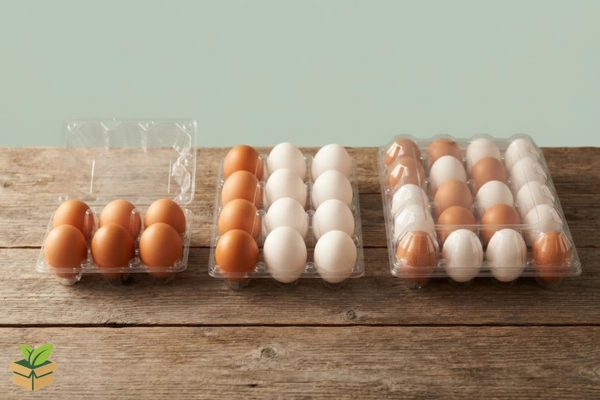
Egg Tray Sizes: 6, 12 & 30 Eggs — Which One Should You Choose?
Choosing the right egg tray sizes sounds simple — until you’re standing in front of a shelf full of options and wondering whether a 6-pack tray is too small or a 30-egg flat is overkill for your kitchen. The truth is, egg trays aren’t one-size-fits-all. Whether you’re a home cook buying eggs for the week, a bakery owner managing daily stock, or a poultry farmer handling bulk production — the right egg tray size makes a real difference in storage, safety, and cost efficiency.
In this guide, we’ll break down the 6 egg tray, 12 egg tray, and 30 egg tray in detail — covering dimensions, materials, ideal use cases, and exactly who each size is best for. By the end, you’ll know precisely which egg tray to choose without second-guessing yourself.
🥚 Why Egg Tray Size Actually Matters
Before jumping into the comparison, let’s talk about why this decision is worth your attention.
Eggs are fragile. Poor packaging leads to cracking, contamination, and waste — all of which cost money. Beyond protection, the right egg packaging size also affects:
- Refrigerator space — a 30-egg flat won’t fit in most home fridges
- Freshness management — smaller trays encourage faster rotation
- Cost per unit — bulk trays reduce per-egg packaging cost
- Presentation — for retail and gifting, size and appearance matter
Understanding egg carton sizes and egg holder sizes helps you make a smarter, more practical choice — whether you’re buying for personal use or running a food business.
📐 Standard Egg Tray Sizes: A Quick Overview
Here’s a clean comparison of the three most common egg tray sizes available in the market:
| Tray Size | Capacity | Typical Dimensions | Common Material | Best For |
|---|---|---|---|---|
| 6 Egg Tray | Half dozen | ~18 x 9 x 7 cm | Plastic, Pulp | Home use, gifting, retail |
| 12 Egg Tray | One dozen | ~30 x 10 x 7 cm | Plastic, Cardboard, Pulp | Home, bakery, small retail |
| 30 Egg Tray | Flat/Crate | ~50 x 30 x 7 cm | Pulp, Cardboard | Farms, bulk buyers, wholesale |
Each size serves a distinct purpose. Let’s explore each one in depth.
🔵 6 Egg Tray — The Half Dozen Option
Who Is It For?
The 6 egg tray — also called a half dozen egg tray — is the most compact option available. It’s designed for people who don’t consume eggs in large quantities or need a neat, presentable way to store or gift a small number of eggs.
Ideal users include:
- Small households (1–2 people)
- Customers buying premium or organic eggs in small batches
- Bakeries offering egg gifting sets or hampers
- Retail shops selling specialty eggs (free-range, farm-fresh)
Key Features
- Compact size — fits easily in any fridge door or shelf
- Lightweight — easy to carry and handle
- Great for presentation — transparent plastic versions look premium
- Eco-friendly options — pulp trays are biodegradable and sustainable
Pros & Cons
| ✅ Pros | ❌ Cons |
|---|---|
| Space-saving and fridge-friendly | Higher cost per egg in packaging |
| Perfect for gifting and retail display | Not practical for large families |
| Easy to carry and transport | Needs frequent restocking |
| Available in clear plastic for visibility | Less common in bulk supply |
If you’re looking for a quality 6 egg tray for home or retail use, the AMS 6 Egg Tray and Krystalite Transparent 6 Egg Tray are excellent options — both durable and visually appealing.
🟢 12 Egg Tray — The Everyday Standard
Who Is It For?
The 12 egg tray — or one dozen egg tray — is by far the most popular egg packaging size worldwide. It’s the sweet spot between convenience and capacity, making it the go-to choice for most households, bakeries, and small food businesses.
Ideal users include:
- Medium to large families
- Home bakers who use eggs regularly
- Cafés, restaurants, and small bakeries
- Grocery stores and retail egg sellers
Key Features
- Standard sizing — fits most refrigerator egg compartments
- Versatile materials — available in plastic, cardboard, and pulp
- Balanced capacity — enough eggs for a week without excess
- Widely available — easiest size to source in bulk
Pros & Cons
| ✅ Pros | ❌ Cons |
|---|---|
| Most universally used size | Can be bulky for small fridges |
| Available in multiple materials | Not cost-efficient for large-scale buyers |
| Great for both home and commercial use | Pulp versions not reusable |
| Easy to stack and store | — |
For the best egg tray for home use or a small bakery, the AMS 12 Egg Tray and Krystalite Transparent 12 Egg Tray offer excellent build quality with a clean, professional look. The transparent version is especially popular for retail display and bakery packaging setups.
🟠 30 Egg Tray — The Bulk Flat
Who Is It For?
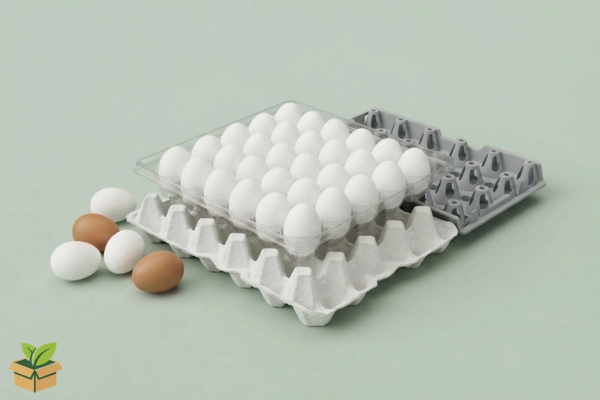
The 30 egg tray — also known as an egg flat or egg crate — is the industry-standard size used in poultry farming, wholesale distribution, and large-scale food production. It holds 30 eggs in a 5×6 grid layout and is almost always made from molded pulp or cardboard.
Ideal users include:
- Poultry farms and egg producers
- Wholesale distributors and suppliers
- Large restaurants, hotels, and catering businesses
- Industrial bakeries with high egg consumption
Key Features
- High capacity — 30 eggs per tray reduces handling frequency
- Stackable design — trays stack securely for transport and storage
- Cost-effective — lowest per-egg packaging cost
- Pulp material — naturally shock-absorbent and eco-friendly
Pros & Cons
| ✅ Pros | ❌ Cons |
|---|---|
| Most economical for bulk buyers | Too large for home refrigerators |
| Stackable for efficient storage | Not suitable for retail display |
| Ideal for farm-to-distributor transport | Single-use in most cases |
| Reduces packaging waste per egg | Requires storage space |
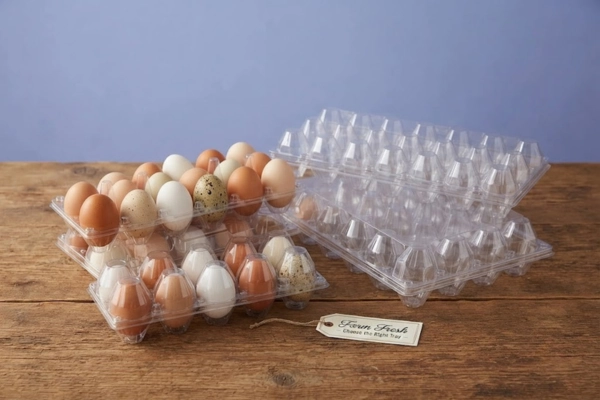
The Krystalite Transparent 30 Egg Tray is a standout option for businesses that want the capacity of a bulk flat with the visual appeal of transparent packaging — perfect for display counters or premium egg retail.
🏠 Which Egg Tray Is Best for Home Use?
For most households, the 12 egg tray is the clear winner. Here’s why:
- A standard family of 3–5 people typically consumes 10–14 eggs per week
- The 12-pack fits neatly in most fridge egg compartments
- It’s easy to find, affordable, and available in reusable plastic versions
- It reduces the need for frequent grocery trips
If you live alone or buy specialty eggs occasionally, a 6 egg tray makes more sense — less waste, better freshness management, and easier storage.
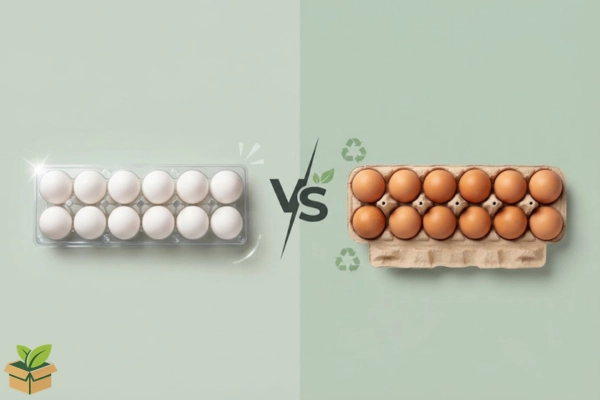
Pro tip: If you’re storing eggs in the fridge, opt for a plastic egg tray over cardboard — plastic doesn’t absorb moisture, keeps eggs fresher longer, and is fully reusable.
🍰 Which Egg Tray Is Best for Bakery or Restaurant Use?
For bakeries and food businesses, the answer depends on your daily egg consumption:
- Low volume (under 2 dozen/day): Stick with 12 egg trays — easy to manage, stack, and rotate
- Medium volume (2–5 dozen/day): Consider buying 12-packs in bulk for organized stock management
- High volume (5+ dozen/day): Switch to 30 egg trays — lower cost, easier bulk handling
Bakeries also benefit from transparent egg trays for customer-facing displays. A clear plastic 12-egg tray on a counter instantly communicates freshness and quality.
If you’re running a bakery, you likely need more than just egg trays. Check out our full range of bakery packaging solutions — from cupcake boxes to cake boxes and brownie boxes — all designed to keep your baked goods as protected as your eggs.
🏭 Are 30 Egg Trays Used on Farms?
Absolutely — and they’re the industry standard for a reason. Poultry farms use 30 egg trays (also called egg flats or egg crates) almost exclusively because:
- They maximize space during transport in crates and boxes
- They’re designed to stack 10–20 layers high with minimal breakage
- Pulp material naturally cushions eggs during vibration and movement
- They’re cost-effective at scale — farms deal in thousands of eggs daily
For egg tray wholesale buyers and poultry operations, the 30-egg flat is non-negotiable. It’s the backbone of bulk egg packaging worldwide.
🧱 What Are Egg Trays Made Of?
Understanding egg tray material helps you choose the right one for your specific need. Here are the three main types:
1. Pulp Egg Trays (Molded Fiber)
- Made from recycled paper or cardboard pulp
- Eco-friendly and biodegradable
- Naturally shock-absorbent — great for transport
- Used mostly for 30-egg flats and farm packaging
- Not reusable after heavy use
2. Plastic Egg Trays
- Made from PET, PP, or PVC plastic
- Reusable and easy to clean
- Available in clear/transparent versions for display
- Popular for home refrigerator use and retail
- Slightly higher upfront cost but long-term value
3. Cardboard Egg Trays
- Traditional carton-style packaging
- Lightweight and printable for branding
- Common in supermarkets and retail stores
- Not moisture-resistant — avoid for long-term fridge storage
For eco-friendly egg packaging, pulp trays are the most sustainable choice. For reusable egg trays at home, transparent plastic is the best investment.
📊 6 vs 12 vs 30 Egg Tray — Full Comparison
Here’s the complete side-by-side breakdown to help you decide:
| Feature | 6 Egg Tray | 12 Egg Tray | 30 Egg Tray |
|---|---|---|---|
| Capacity | Half dozen | One dozen | Bulk flat |
| Best For | Home, gifting, retail | Home, bakery, café | Farm, wholesale, catering |
| Material Options | Plastic, pulp | Plastic, cardboard, pulp | Pulp, cardboard |
| Fridge-Friendly | ✅ Yes | ✅ Yes | ❌ No |
| Reusable | ✅ Plastic versions | ✅ Plastic versions | ❌ Usually single-use |
| Cost Per Egg | Highest | Moderate | Lowest |
| Stackable | Limited | Moderate | ✅ Excellent |
| Eco-Friendly | ✅ Pulp options | ✅ Pulp options | ✅ Pulp standard |
| Retail Display | ✅ Excellent | ✅ Good | ❌ Not ideal |
🛒 Where to Buy Egg Trays in Pakistan
If you’re looking for quality egg trays in Pakistan — whether for home, retail, or bulk use — EcoPackaging.pk has you covered. Browse the complete egg tray collection including:
- AMS 6 Egg Tray — compact and sturdy for home or retail
- AMS 12 Egg Tray — the everyday standard for families and bakeries
- Krystalite Transparent 6 Egg Tray — crystal-clear display quality
- Krystalite Transparent 12 Egg Tray — premium retail and bakery use
- Krystalite Transparent 15 Egg Tray — mid-range capacity with full visibility
- Krystalite Transparent 30 Egg Tray — bulk capacity with display appeal
All products are available through the AMS Egg Tray and Krystalite Egg Tray collections.
✅ Final Verdict — Which Egg Tray Should You Choose?
Here’s the simple decision guide:
- Choose a 6 egg tray if you live alone, buy specialty eggs, or need attractive retail/gift packaging
- Choose a 12 egg tray if you’re a regular household, home baker, café, or small restaurant — it’s the most practical all-rounder
- Choose a 30 egg tray if you’re a poultry farmer, wholesale distributor, large caterer, or industrial bakery that handles eggs in volume
The best egg tray size isn’t about which is biggest or cheapest — it’s about matching the tray to your actual consumption, storage space, and purpose. Get that right, and you’ll never deal with cracked eggs, wasted packaging, or cluttered fridges again.
💡 Conclusion
Egg tray sizes exist for a reason — because different people have genuinely different needs. A 6 egg tray brings elegance and convenience to small households and premium retail. A 12 egg tray is the dependable everyday workhorse for homes and bakeries. A 30 egg tray is the powerhouse of bulk egg packaging for farms and large-scale food operations.
Now that you know the difference, choosing the right one is easy. Head over to our egg tray category and pick the size that fits your life — or your business.
📦 Need More Packaging Solutions? Explore our full range of eco-friendly food packaging, bakery packaging, and plastic products — all available with fast delivery across Pakistan.





















(0) Comments