

How Fries Packaging Affects Crispiness: The Hidden Science Behind Every Crunch
If you’ve ever opened a takeaway box and found your fries sad, limp, and soggy instead of golden and crunchy, you already know that fries packaging and crispiness are tightly connected in ways most people never think about. It’s not just about the fryer, the oil temperature, or how long the fries sat under the heat lamp. A huge part of that first satisfying crunch — or the disappointing lack of it — is decided by the box, cone, or bag your fries are sitting in the moment they leave the kitchen.
Here’s the thing: crispiness is a race against time and moisture. The second fries come out of the fryer, steam starts escaping from the inside, and if that steam has nowhere to go, it turns back into water and settles right back onto the surface of the fries. That’s the science behind every soggy fry complaint you’ve ever seen on a delivery app review. Let’s unpack exactly how packaging influences this process, what materials actually work, and how you can choose the right setup for your restaurant or food business.
🍟 Why Crispiness Is the Real Test of Fries Quality
Crispiness is arguably the single most important sensory signal customers use to judge fries. Taste matters, sure, but texture is what makes people post a five-star review or complain in the comments. When customers bite into a fry, they expect that light, audible crunch on the outside followed by a soft, fluffy center. The moment that crunch is missing, the entire eating experience feels off, even if the fries were perfectly cooked.
This is exactly why packaging impact on fries texture deserves as much attention as the frying process itself. A kitchen can nail the perfect fry — crispy, golden, seasoned just right — and still lose the battle if it’s dropped into the wrong container. Packaging isn’t just a delivery vehicle; it’s an active participant in whether that crunch survives the journey from fryer to fork.
🔬 The Science: How Packaging Affects Fries Crispiness
To really understand how packaging affects fries crispiness, it helps to think of fries as tiny moisture factories. Fresh out of the fryer, they’re releasing steam continuously for several minutes. That steam needs somewhere to go — otherwise it condenses right back onto the fry surface, softening the crispy shell almost instantly.
Steam Buildup and Moisture Trap
When fries are placed inside a sealed, non-breathable container, steam has nowhere to escape. It circulates inside the box, hits the cooler inner walls, turns into water droplets, and drips straight back onto the fries. This is the single biggest cause of the soggy fries packaging problem that so many restaurants struggle with, especially during delivery.
Heat Retention vs Ventilation Balance
On the flip side, too much airflow cools the fries down too fast, and cold fries lose their appeal just as quickly as soggy ones. The real goal is packaging airflow design that strikes a balance — letting steam escape without letting all the heat disappear along with it. This is precisely why the shape, material, and ventilation holes of a container matter so much more than most people assume.
📦 Fries Packaging Materials That Make or Break Crispiness
Not all packaging materials behave the same way once heat and moisture enter the picture. Some absorb grease and steam efficiently, while others trap everything inside and speed up sogginess. Choosing the right packaging material for french fries is one of the most practical decisions a food business can make.
Kraft paper, for instance, is naturally more breathable than plastic. It allows a certain amount of steam to escape through the fibers while still holding its shape. Plastic containers, on the other hand, create an almost airtight seal, which looks appealing on shelves but does real damage to texture within minutes. Cardboard sits somewhere in between — sturdy and presentable, but only effective when it’s designed with proper ventilation.
Here’s a quick side-by-side comparison to make this easier to visualize:
| Material | Breathability | Grease Resistance | Best Use Case |
|---|---|---|---|
| Kraft Paper (Cones/Pockets) | High | Good | Dine-in & quick-serve fries |
| Plastic Containers | Low | Moderate | Cold sides, not ideal for hot fries |
| Coated Cardboard Boxes | Medium-High | Excellent | Fast food & delivery boxes |
| Perforated Paper Trays | Very High | Good | Premium restaurant presentation |
If you’re sourcing packaging in bulk, browsing a dedicated fries packaging collection makes it much easier to compare these material types side by side before placing an order.
🕳️ Why Ventilated Fry Boxes Outperform Sealed Containers
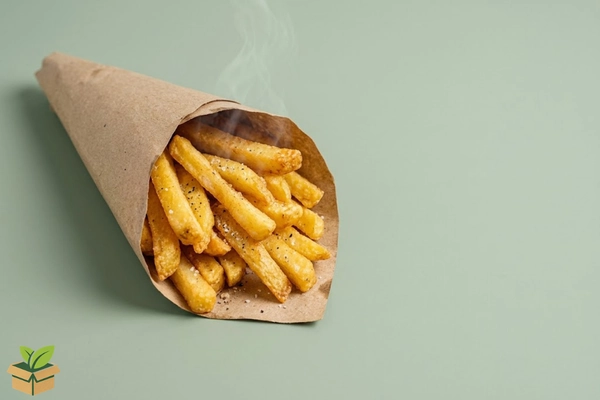
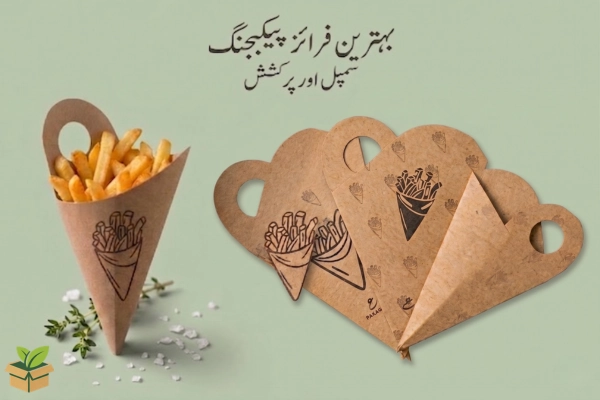
This is where ventilated fry boxes genuinely change the game. A well-designed fry box or paper cone includes small perforations or open-top designs that let steam rise and escape naturally, instead of trapping it against the fries. Think about the classic kraft paper cone shape used by street vendors and fast-food chains alike — it’s not just for nostalgia or branding; it’s functional. The open top allows constant airflow while the tapered shape keeps fries upright and separated, reducing the surface area where moisture can pool.
Products like large kraft fries paper cones and medium kraft fries paper cones are popular precisely because their open-air design supports fry container ventilation far better than a closed plastic tub ever could. Even smaller portions benefit from this — a kraft fries pocket works well for quick grab-and-go servings where crispiness needs to hold for just a few minutes longer.
🧴 Grease-Resistant Packaging: Protecting Crispiness and Cleanliness
Crispiness isn’t only about moisture from steam — oil plays a role too. Fries release a fine layer of oil as they cool, and if the packaging material isn’t grease-resistant, that oil seeps through and softens the paper or cardboard itself, which then transfers moisture back onto the fries. This is why grease-resistant fries packaging matters just as much as ventilation.
Materials treated with a light wax or food-grade coating act as a barrier, absorbing surface oil without letting it soak through and compromise the container’s structural integrity. A layer of butter paper as an inner liner, for example, is a smart low-cost trick many food businesses use to add an extra grease-absorbent layer between the fries and the outer packaging. It keeps the box looking clean on the outside while managing oil on the inside — a small addition that noticeably extends how long the crunch lasts.
🚚 Delivery Packaging for Fries: The Biggest Crispiness Challenge
If in-store packaging is a short sprint against sogginess, delivery packaging for fries is a marathon. Delivery times can stretch anywhere from fifteen minutes to over an hour, and every extra minute inside a sealed bag or insulated container gives steam more time to condense and ruin the texture.
This is one of the most common complaints in the food delivery industry, and it’s also one of the easiest to fix with the right approach. Insulated bags keep fries warm, which is good, but if the inner packaging itself isn’t breathable, that heat becomes the enemy — trapping steam inside a warm, humid pocket that softens fries even faster than if they were left uncovered. The smartest delivery setups pair a breathable inner box or cone with an insulated outer bag, giving fries the best of both worlds: warmth without moisture buildup.
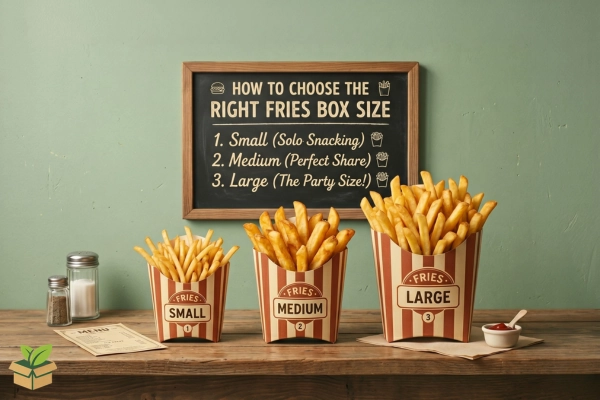
Restaurants that want a deeper dive into sizing and portioning for delivery specifically should check out this detailed guide on how to choose the right fries box size, which breaks down exactly how portion size interacts with ventilation needs.
🏭 Fast Food Fries Packaging: What Big Brands Do Differently
Large fast-food chains have spent decades refining fast food fries packaging, and their choices reveal a lot about what actually works at scale. Most major brands use double-layered paper containers with small vent gaps, combined with an open-top or flip-lid design that allows steam to escape immediately after packing.
They also tend to portion fries into smaller, wider containers rather than tall, narrow ones — spreading fries out reduces the number of fries stacked on top of each other, which means less trapped steam between layers. A snack bucket style container, for instance, offers that wider surface area while still being practical for combo servings alongside items from a fried chicken bucket lineup. If you’re curious how these principles apply specifically to Pakistani fast-food operations, this breakdown of the best fries packaging for fast food restaurants in Pakistan is worth a read.
🌱 Eco-Friendly Fries Packaging Without Sacrificing Crunch
There’s a common myth that sustainable packaging can’t perform as well as plastic — but when it comes to fries, the opposite is often true. Eco-friendly fries packaging made from kraft paper or biodegradable board is naturally more breathable than plastic, which means it actually protects crispiness better while also being kinder to the environment.
This dual benefit — better texture retention plus lower environmental impact — is a major reason why so many restaurants across Pakistan are shifting toward paper-based fry containers. If you want to understand why this shift is happening industry-wide, this guide on why eco-friendly packaging matters in Pakistan covers the bigger picture, while this biodegradable food packaging guide goes deeper into material options specifically.
🛠️ Practical Tips: Choosing the Best Packaging for Crispy Fries
Here’s a quick, practical checklist to keep in mind when sourcing packaging for best packaging for crispy fries:
- Choose containers with visible ventilation holes or an open-top design rather than fully sealed lids
- Prefer kraft paper or coated cardboard over solid plastic for anything served hot
- Add a grease-absorbent liner for extra protection during longer wait times
- Portion fries into wider, shallower containers instead of deep, narrow ones
- Pair breathable inner packaging with insulated outer bags specifically for delivery orders
Small adjustments like these consistently make the difference between fries that stay crunchy for twenty minutes and fries that go soft in five. It’s also worth reviewing this list of common packaging mistakes small businesses make, since several of the same principles apply directly to fries and other fried snacks.
📊 Quick Comparison: Best vs Worst Packaging Choices for Fries
| Packaging Choice | Effect on Crispiness | Recommended? |
|---|---|---|
| Open kraft paper cone | Excellent airflow, minimal sogginess | ✅ Highly recommended |
| Perforated cardboard box | Good balance of heat and ventilation | ✅ Recommended |
| Sealed plastic container | Traps steam, softens fries fast | ❌ Not recommended |
| Foil-wrapped packaging | Retains heat but blocks steam escape | ❌ Avoid for hot fries |
The pattern is clear across the board — anything that allows steam to escape naturally will outperform sealed, airtight alternatives every single time.
🎯 Final Thoughts: Packaging Is Part of the Recipe
At the end of the day, the connection between fries packaging crispiness isn’t a minor detail — it’s an extension of the cooking process itself. A perfectly fried batch of fries can lose its entire appeal within minutes if it’s sealed inside the wrong container, while thoughtful, breathable packaging can preserve that fresh-from-the-fryer crunch far longer than most businesses expect.
For restaurants, cafes, and food delivery businesses, this isn’t just about customer satisfaction — it directly affects how packaging affects food sales in Pakistan, since texture complaints are one of the fastest ways to lose repeat customers. Investing in the right materials, ventilation design, and grease-resistant liners pays off in reviews, reorders, and brand reputation.
If you’re ready to upgrade your fries packaging with materials designed specifically to preserve crispiness, explore the full fries packaging collection at EcoPackaging.pk and give your fries the container they actually deserve.
❓ Frequently Asked Questions
1. How does packaging affect fries crispiness? Packaging affects crispiness by controlling how steam and grease escape after frying. Sealed, non-breathable containers trap moisture, causing it to condense and soften the fry’s outer shell, while ventilated packaging lets steam escape and preserves the crunch.
2. What is the best packaging material for keeping fries crispy? Kraft paper and perforated cardboard are generally the best packaging materials for crispy fries because they’re breathable and allow steam to escape naturally, unlike sealed plastic containers.
3. Why do fries get soggy in delivery packaging? Fries get soggy during delivery because extended time inside sealed, insulated packaging traps steam and heat together, creating a humid environment that softens the fry surface long before it reaches the customer.
4. Are eco-friendly fries boxes better for crispiness? Yes, eco-friendly fries boxes made from kraft paper or biodegradable board are typically more breathable than plastic alternatives, which helps maintain crispiness while also being more sustainable.
5. Do ventilation holes really make a difference in fry packaging? Absolutely. Ventilation holes or open-top designs allow steam to escape immediately after packing, significantly slowing down the moisture buildup that causes fries to turn soft.















(0) Comments