

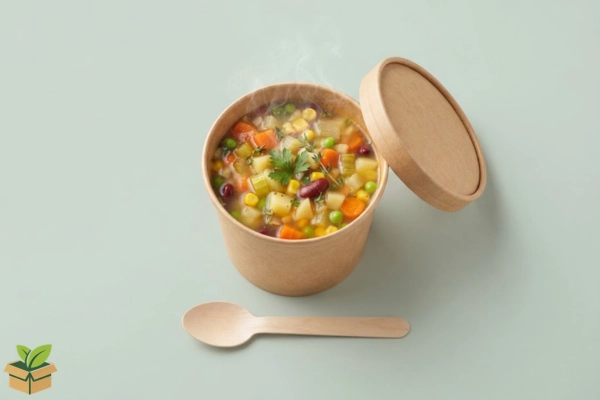
How to Package Soups in Kraft Bowls: The Complete Leak-Proof Guide for Restaurants
If you run a restaurant, cloud kitchen, or catering business, you already know that soup is one of the trickiest items to pack. It’s hot, it’s liquid, and one wrong move can end up as a stain on your delivery bag instead of a warm meal on someone’s table. That’s exactly why learning how to package soups in kraft bowls has become such an essential skill for food businesses across Pakistan. Kraft bowls are lightweight, biodegradable, and surprisingly sturdy when packed correctly — but getting that “correctly” part right is where most sellers go wrong. In this guide, we’ll walk through every practical step, from choosing the right bowl size to sealing it so it survives a bumpy bike ride, so your soups arrive exactly the way you served them.
🥣 Why Kraft Bowls Are Becoming the Go-To Choice for Soup Packaging
Over the last few years, kraft paper bowls have quietly replaced foam and plastic containers on menus across Pakistan’s food industry. Part of this shift is driven by customer expectations — people simply feel better ordering food that comes in eco-friendly soup packaging bowls rather than containers that pile up as plastic waste. But there’s also a very practical business reason behind it: kraft paper handles heat, oil, and moisture far better than most people assume, provided it’s manufactured with the right coating.
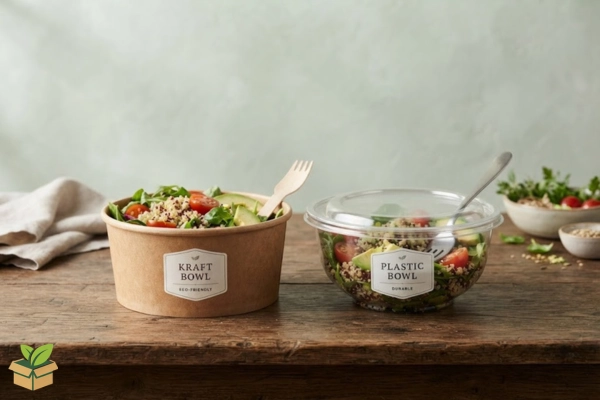
Unlike plastic, which can warp under high heat or leach odors into food, food-safe kraft material is designed to hold structure while insulating the soup just enough to keep it warm during a 20–30 minute delivery window. It’s also stackable, which matters a lot if you’re running a busy kitchen with limited counter space. When you compare the environmental footprint, disposable kraft soup bowls decompose far faster than plastic alternatives, which makes them a natural fit for restaurants trying to build a sustainable, socially responsible brand image. If you’re curious about how this compares to older packaging materials, our breakdown on kraft bowl vs plastic bowl options goes deeper into the durability and cost differences.
🧾 Understanding Kraft Bowls Before You Start Packing
Before jumping into the packing process itself, it helps to understand what you’re actually working with. Not all kraft bowls are built the same, and choosing the wrong grade or size is usually where soup-packing problems begin.
What Makes Kraft Paper Suitable for Hot Liquids
Good quality kraft paper soup containers are lined with a thin, food-grade coating that creates a barrier between the paper fibers and the liquid. This coating is what makes the bowl grease-resistant and moisture-resistant, preventing the classic “soggy bottom” problem that ruins presentation and creates leaks. Without this lining, even the sturdiest-looking paper bowl will weaken within minutes of contact with hot broth. So when sourcing kraft bowls for soup packaging, always check whether the supplier specifies food-safe, grease-resistant lining — this single detail separates a professional packaging solution from a liability.
Common Kraft Bowl Sizes for Soup Portions
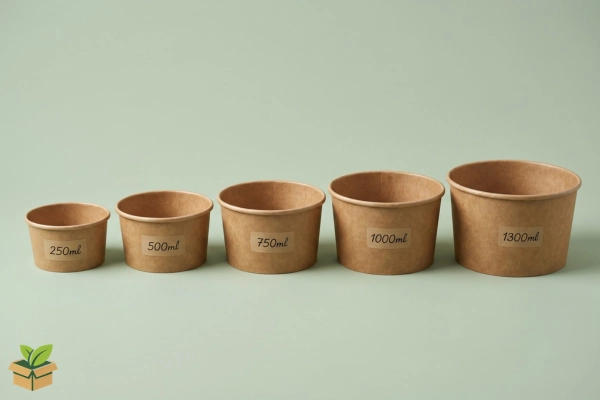
Portion size plays a bigger role in packaging success than most people realize. A bowl that’s too large leaves room for the soup to slosh around and spill during transport, while one that’s too small risks overflow when the lid is pressed down. Here’s a quick reference table to help you match bowl capacity with typical soup servings:
| Bowl Size | Best Use Case |
|---|---|
| 200ml – 250ml | Small appetizer or kids’ portion soup |
| 350ml – 500ml | Standard single-serving soup order |
| 750ml – 1000ml | Family-style or sharing portion |
| 1300ml | Bulk catering or event servings |
For a more detailed breakdown of capacity options, our guide on kraft bowl sizes from 250ml to 1300ml covers exactly which size suits different menu items, including soups, curries, and biryani.
🔥 Step-by-Step: How to Package Soups in Kraft Bowls
This is the part everyone’s really here for — the actual process. Packaging soup properly isn’t complicated once you understand the sequence, but skipping even one step can undo all your effort. Let’s break it down.
Step 1: Choose the Right Bowl Size and Grade
Start by matching your soup portion to the correct kraft bowl with lid capacity, as shown in the table above. Always confirm the bowl is rated for hot liquid packaging solutions rather than a general-purpose paper bowl meant for dry snacks, since dry-use bowls often lack the grease-resistant lining soup requires.
Step 2: Pre-Check for Leak-Proof Sealing Quality
Before filling, quickly inspect the bowl’s rim and base. A well-manufactured leak-proof soup bowl should have a tight, even seam with no visible gaps. If you’re sourcing in bulk, it’s worth spot-checking a few units from each batch — a small manufacturing flaw in one bowl can turn into a costly customer complaint later.
Step 3: Fill the Bowl to the Right Level
Fill the bowl to roughly 80–85% of its total capacity, leaving a small gap at the top. This isn’t just about avoiding overflow — that little air pocket actually helps the lid seal more securely and reduces pressure buildup when the container is jostled during transit.
Step 4: Seal with the Matching Lid Immediately
Once filled, place the corresponding kraft paper bowl with lid on top and press down firmly around the entire rim, not just the center. An uneven seal is one of the most common causes of leakage, especially when bowls get tilted inside a delivery bag. If your packaging line handles high order volumes, consider a simple press-seal station to keep this step consistent across every order.
Step 5: Add Extra Insulation for Hot Soups
For soups served extra hot, a folded napkin or corrugated sleeve placed underneath the bowl adds a layer of insulated soup packaging protection, both for heat retention and for the customer’s hands during pickup. This small addition also protects delivery bags from heat marks, which matters more than people expect when it comes to repeat orders and reviews.
Step 6: Label and Brand for Professional Presentation
A simple sticker with your logo, the soup name, and a “may contain hot liquid” warning goes a long way. Custom kraft soup bowls with printed branding also reinforce trust — customers associate clean, labeled packaging with better food safety standards, even before they’ve tasted the soup.
Step 7: Secure for Delivery or Pickup
Finally, place the sealed bowl upright inside your delivery bag, ideally in a compartment where it won’t tip during transport. If you’re shipping multiple soup bowls together, avoid stacking them directly on top of each other — a light divider or tray keeps things stable and prevents accidental spills that soak into other packed items.
🌱 Best Practices for Leak-Proof, Spill-Proof Results
Even after mastering the steps above, a few extra habits can noticeably improve consistency across every order:
- Always store kraft bowls in a dry area — humidity weakens paper strength over time.
- Use a slightly larger bowl for soups with chunky ingredients like meatballs or dumplings to avoid pressure against the lid.
- Double-check lid alignment before sealing, since a crooked lid rarely seals tight.
- For long-distance deliveries, consider double-bagging as an added safety layer.
These small adjustments make a noticeable difference, especially for businesses handling high delivery volumes where even a 2–3% spill rate can quietly damage customer trust over time.
♻️ Kraft Bowls vs Other Packaging Options
It’s worth understanding how kraft bowls stack up against other common materials, especially if you’re deciding what to switch to or stick with.
| Feature | Kraft Bowl | Plastic Bowl | Foam Container |
|---|---|---|---|
| Biodegradability | High | Low | Very Low |
| Heat Retention | Moderate–High | Low | High |
| Leak Resistance (with lid) | High | High | Moderate |
| Customer Perception | Eco-Friendly, Premium | Neutral | Negative (Environmental Concern) |
| Cost Efficiency | Competitive | Cheap Initially | Cheap Initially |
As the table shows, kraft bowls strike a strong balance — they’re not the absolute cheapest option upfront, but they win on sustainability, presentation, and long-term brand value. If you’re weighing this decision more seriously for your business, our detailed comparison on kraft bowls versus plastic bowls breaks down the cost-per-unit economics too.
🍲 Practical Examples From Real Food Businesses
Seeing how this plays out in real kitchens often makes the process click faster than theory alone.
A small cloud kitchen in Lahore switched from plastic containers to takeout soup containers made of kraft paper and reported fewer spill-related complaints within the first month, largely because their staff adopted the “80% fill, firm-press seal” habit described earlier. A catering business handling wedding events used the 1300ml bulk size for shared soup stations, pairing it with insulated sleeves to keep broth hot for guests serving themselves over a two-hour window. And a home-based food seller found that simply upgrading to grease-resistant kraft paper eliminated the soggy-bottom issue she’d been struggling with for months.
These examples highlight something important: the packaging material matters, but consistency in the packing process matters just as much. Businesses that treat soup packaging as a quick afterthought tend to see more returns and complaints, while those that build it into a standard operating procedure see it pay off in customer trust.
💰 Cost, Sustainability, and Business Benefits
Switching to kraft bowls isn’t purely a sustainability decision — it often makes financial sense too. Bulk kraft packaging tends to become cost-competitive with plastic once you factor in the branding value and reduced customer complaints from leak-free delivery. Many restaurant owners also find that highlighting their move toward sustainable food packaging becomes a genuine marketing angle, especially with a growing segment of environmentally conscious customers actively choosing brands based on packaging choices.
If you’re currently using plastic or foam and considering a switch, our guide on how to move to eco-friendly packaging without increasing costs walks through practical strategies for making that transition smoothly, without disrupting your existing supply chain.
✅ Quick Checklist Before You Ship Your Soup
Before every batch goes out the door, a fast final check can save you from avoidable losses:
- Bowl size matches portion (80–85% fill level)
- Lid pressed firmly around the entire rim
- No visible tears, dents, or weak seams
- Insulation sleeve added for extra-hot orders
- Bowl placed upright and stable in the delivery bag
Small habits like this, repeated consistently, are often what separate a five-star delivery experience from a one-star complaint.
🍜 A Related Note on Similar Packaging Needs
If soups are just one part of your menu, it’s worth exploring how kraft bowls perform with other dishes too. Many restaurants use the same containers for rice-based dishes — our guide on using kraft bowls for biryani packaging shows how the same principles apply with a few adjustments for drier food. Similarly, if you serve cold items alongside soups, our piece on salad bowl packaging covers how to keep fresh ingredients crisp during delivery. And for a broader look at how these containers perform across delivery conditions in general, how kraft bowls keep food fresh during delivery is a great follow-up read.
If you’d like to explore the full range of sizes and styles available, you can browse our complete kraft bowls collection, including popular options like the 480ml kraft bowl with lid and the 750ml kraft bowl with lid, both widely used for single and family-style soup servings.
🚀 Final Thoughts
Packaging soup well isn’t about luck — it’s about following a repeatable process that respects the material you’re working with. Once you understand how to package soups in kraft bowls correctly, from selecting the right size to sealing with intention, you’ll notice fewer complaints, better presentation, and a packaging choice that actually strengthens your brand’s sustainability story. It’s a small operational upgrade that pays off in customer trust every single day.
If you’re ready to upgrade your soup packaging, explore our full range of eco-friendly kraft bowls and find the perfect size for your menu today.
❓ Frequently Asked Questions
Q1: What is the best kraft bowl size for soup packaging? For most single servings, a 350ml–500ml kraft bowl works best. Family-style or bulk catering orders typically need 750ml to 1300ml sizes.
Q2: Are kraft bowls leak-proof for hot soup? Yes, when paired with a properly fitted lid and food-grade grease-resistant lining, kraft bowls are highly leak-resistant for standard delivery timeframes.
Q3: Can kraft soup bowls be microwaved? Most food-grade kraft bowls are microwave-safe for short reheating durations, but it’s best to confirm with your specific supplier’s product specifications.
Q4: Are kraft bowls actually eco-friendly compared to plastic? Yes. Kraft bowls are biodegradable and often compostable, breaking down significantly faster than plastic or foam alternatives.
Q5: How long do kraft bowls keep soup hot during delivery? With proper sealing and an insulation sleeve, kraft bowls typically retain adequate heat for 20–30 minutes, suitable for most local delivery windows.

















(0) Comments