
Sustainable Food Packaging in Pakistan — Why It Matters More Than Ever in 2026
Pakistan generates over 20 million tons of solid waste every year — and a staggering portion of it comes from food packaging. Walk down any street in Karachi, Lahore, or Islamabad after dinner rush hour, and the evidence is impossible to ignore: styrofoam containers, plastic bags, and single-use wrappers piling up in gutters, on roadsides, and in waterways.
But 2026 is different. Something is shifting — and it’s shifting fast.
Sustainable food packaging in Pakistan is no longer a niche concept discussed only in boardrooms of multinational companies. It’s becoming a real, practical, and increasingly urgent conversation for every restaurant owner, café operator, and food delivery business in the country. Customers are asking for it. Regulators are moving toward it. And the planet — frankly — demands it.
This blog unpacks why sustainable packaging matters so deeply right now, what’s changed in Pakistan’s food industry landscape, and how your restaurant can be part of the solution — starting today.
🌍 Pakistan’s Plastic Problem: The Reality We Can’t Ignore
Let’s start with the uncomfortable truth.
Pakistan is among the world’s top contributors to plastic pollution. According to environmental reports, Pakistan produces approximately 3.3 million tons of plastic waste annually, with a significant chunk coming directly from the food and restaurant industry. Single-use plastic bags, styrofoam takeaway boxes, plastic straws, and non-recyclable food containers are used by millions of restaurants, cafés, and street food vendors every single day.
The environmental impact of food packaging in Pakistan is severe:
- 🌊 Plastic waste clogs rivers like the Ravi, Chenab, and Lyari — contributing to flooding and water contamination
- 🐄 Animals ingest plastic waste, causing widespread harm to livestock and wildlife
- 🌡️ Burning plastic waste (a common disposal method in Pakistan) releases toxic gases contributing to air pollution and climate change
- 🏙️ Urban landfills in Karachi and Lahore are overflowing — with plastic packaging being a primary culprit
- 💧 Microplastics are now being found in Pakistan’s groundwater and food supply
This isn’t just an environmental issue. It’s a public health crisis. And restaurants — whether they realize it or not — are at the center of it.
📜 What’s Changed in 2026: Regulations, Awareness & Consumer Demand
The Regulatory Shift
Pakistan’s government has been tightening its grip on single-use plastic for several years. The single-use plastic ban in Pakistan has been implemented in phases across major cities, with Islamabad leading the charge. In 2026, enforcement has become stricter, with fines and penalties increasingly applied to businesses that continue using banned plastic items.
Key regulatory developments in 2026:
- Expanded ban on single-use plastic bags across all four provinces
- Restrictions on styrofoam food containers in multiple cities
- New packaging regulations requiring food businesses to shift toward recyclable or biodegradable alternatives
- Government incentives for businesses adopting sustainable practices
Smart restaurant owners aren’t waiting to be forced. They’re getting ahead of the curve — and reaping the rewards.
The Consumer Awareness Revolution
Pakistani consumers — especially the urban, educated, and younger demographic — are increasingly eco-conscious. Social media has played a massive role. When a restaurant uses beautiful kraft paper packaging or wooden cutlery, customers photograph it, share it, and talk about it.
The reverse is also true. Restaurants still using styrofoam or excessive plastic are being called out publicly — and the reputational damage is real.
What Pakistani consumers want in 2026:
- Packaging that looks good and feels responsible
- Brands that align with their values
- Visible commitment to reducing plastic waste
- Transparency about sustainability practices
This isn’t just idealism. It’s a business reality that forward-thinking restaurants are already capitalizing on.
♻️ What Is Sustainable Food Packaging — And What Makes It “Sustainable”?
Before diving deeper, let’s clarify what green food packaging actually means — because not everything marketed as “eco-friendly” truly is.
Genuinely sustainable packaging must meet at least one of these criteria:
| Property | What It Means |
|---|---|
| Biodegradable | Breaks down naturally without leaving toxic residue |
| Compostable | Breaks down within 90 days under composting conditions |
| Recyclable | Can be processed and reused as raw material |
| Renewable Source | Made from materials that regenerate naturally (paper, bamboo, sugarcane) |
| Reduced Material | Uses less material overall to minimize waste |
The most impactful biodegradable packaging materials available in Pakistan right now include:
- Kraft paper — recycled, recyclable, and biodegradable
- Bagasse (sugarcane pulp) — compostable within 60–90 days
- Bamboo — fast-growing, renewable, and fully biodegradable
- Birchwood — natural, single-use but biodegradable
- Recycled cardboard — lower carbon footprint than virgin materials
Each of these is now readily available in Pakistan — and more affordable than ever.
🍽️ Why Sustainable Packaging Matters Specifically for Pakistani Restaurants
1. 📈 It’s a Competitive Advantage
In Pakistan’s crowded restaurant market, differentiation is everything. Green packaging for restaurants in Pakistan is one of the most visible, tangible ways to stand out.
Think about it — when a customer opens a delivery bag and finds a beautifully designed kraft box, wooden cutlery, and a paper straw instead of plastic, the experience is immediately elevated. They feel good about their choice. They’re more likely to reorder, recommend, and review positively.
Sustainable packaging is marketing that works every single time a meal is delivered.
2. 💰 It’s More Cost-Effective Than You Think
One of the biggest myths about eco-friendly packaging in Pakistan 2026 is that it’s expensive. The reality? The price gap between conventional plastic packaging and sustainable alternatives has narrowed dramatically.
- Kraft paper burger boxes are now priced comparably to plastic alternatives
- Paper straws cost only marginally more than plastic straws
- Wooden cutlery is available at bulk wholesale prices that make the switch financially sensible
- Buying in bulk from suppliers like EcoPackaging.pk reduces per-unit costs significantly
When you factor in the marketing value, customer loyalty boost, and regulatory compliance, sustainable packaging actually saves money in the medium to long term.
3. ⚖️ Regulatory Compliance — Stay Ahead, Not Behind
Restaurants that haven’t started transitioning to sustainable packaging are taking a real risk. As plastic ban updates in Pakistan 2026 continue to roll out, businesses caught using banned materials face fines, negative press, and operational disruption.
Getting ahead of regulations now means:
- No scrambling for last-minute alternatives
- No operational disruption when new bans kick in
- Positioning your brand as a leader, not a laggard
4. 🌱 It’s the Right Thing to Do
Beyond business logic, there’s a moral dimension that matters. Pakistan’s rivers, cities, and communities are suffering from plastic pollution. The food industry has a responsibility — and an opportunity — to be part of the solution.
Restaurants that embrace zero waste food packaging aren’t just building better businesses. They’re building a better Pakistan.
🔬 The Best Sustainable Packaging Materials for Pakistani Restaurants in 2026
Let’s get practical. Here are the top sustainable packaging materials that are actually available and genuinely effective for Pakistani restaurants right now.
🟤 1. Kraft Paper — The Versatile Workhorse
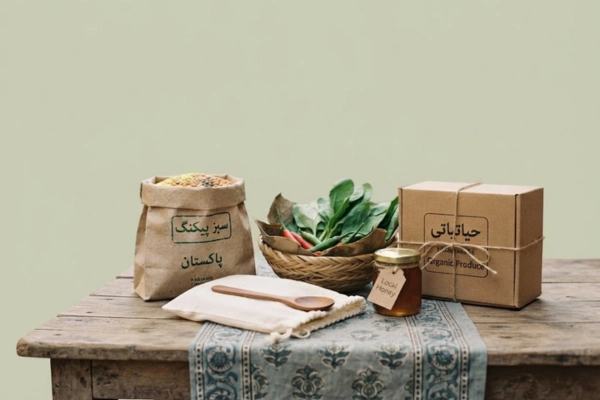
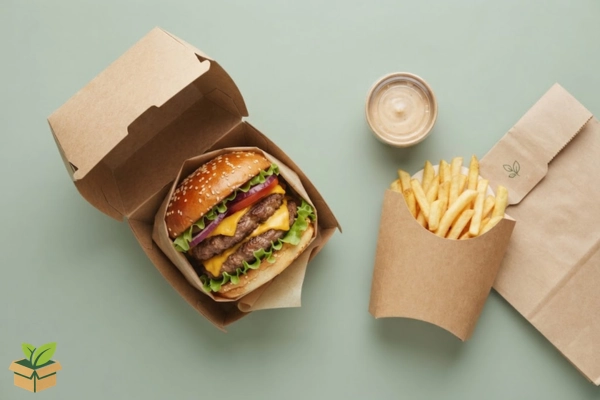
Kraft paper is the backbone of sustainable restaurant packaging in Pakistan. It’s strong, food-safe, grease-resistant, and completely recyclable.
Best applications:
- Kraft burger boxes for fast food restaurants
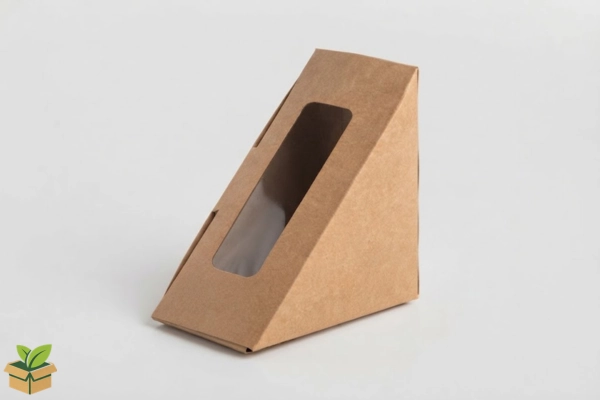
- Kraft sandwich boxes with window for cafés and delis
- Kraft fries pockets and paper cones for street food
- Kraft paper bags with rope handles for takeaway orders
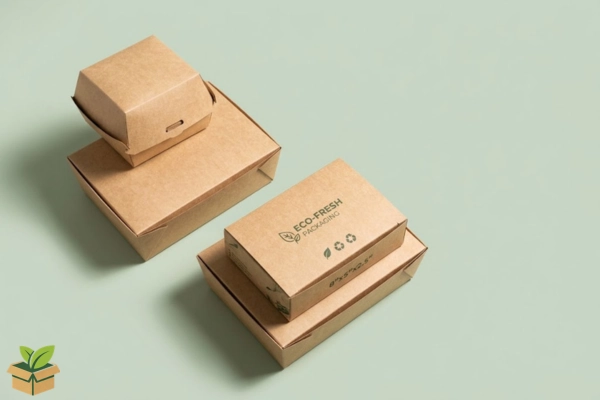
- Kraft multipurpose boxes for combo meals
Explore the complete kraft food packaging range for all your restaurant needs.
🌾 2. Bagasse — The Compostable Champion
Made from sugarcane pulp — a byproduct of Pakistan’s own sugar industry — bagasse packaging is arguably the most genuinely sustainable option available. It’s heat-resistant, microwave-safe, and composts within 90 days.
For restaurants serving hot desi food, curries, rice dishes, or BBQ platters, the compostable 3-compartment biodegradable disposable plates are a direct, practical replacement for styrofoam — with zero compromise on functionality.
Browse the eco food packaging category for the full range of compostable options.
🥣 3. Kraft Bowls — For Soups, Rice & Noodles
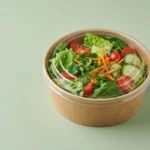
Kraft bowls with lids are a game-changer for restaurants serving liquid or semi-liquid foods. They’re leak-resistant, food-grade, and come in sizes from 200ml to 1000ml — covering everything from small sauces to large rice portions.
- 200ml kraft bowl — sauces and dips
- 480ml kraft bowl — regular meal portions
- 750ml kraft bowl — generous servings
- 1000ml kraft bowl — family portions and catering
🥢 4. Wooden & Bamboo Cutlery — Replacing Plastic Forever
Wooden cutlery in Pakistan has gone from novelty to necessity. Birchwood forks, spoons, and knives are smooth, sturdy, and fully biodegradable — everything plastic cutlery is not.
Available options include:
- Eco-friendly wooden fork
- Birchwood wooden spoon
- Birchwood wooden knife
- Birchwood dinner spork — perfect for rice and pasta
- Bamboo chopsticks — for Asian cuisine
- Wooden coffee stir sticks — for cafés
- Wooden skewer sticks — for BBQ and street food
All of these are available through the eco products range — biodegradable, practical, and customer-approved.
☕ 5. Paper Coffee Cups & Eco Straws
For cafés and restaurants serving hot or cold drinks, the switch from plastic cups and straws to paper alternatives is one of the most impactful changes possible.
- 12oz brown double-wall coffee cup — insulated, no plastic lining
- 8oz insulated ripple double-wall coffee cup — premium café feel
- 6mm paper straws — the standard eco replacement
- Kraft 4-cup coffee carrier — replaces plastic carriers entirely
Browse the full coffee cup collection and coffee straws range for café-ready sustainable options.
🍕 6. Eco Pizza Boxes
Pizza boxes have always been paper-based — but not all are created equal. Kraft pizza boxes made from recycled materials with no plastic coatings are the genuinely sustainable choice.
- Square pizza boxes in all sizes
- 6-corner pizza boxes — stronger structure, less material waste
- Customized pizza boxes — branded eco packaging
The 6-corner design is particularly smart — it uses less paper while providing more strength, making it both eco-friendly and cost-efficient.
📊 Sustainable vs. Conventional Packaging: A Direct Comparison
Here’s how sustainable packaging stacks up against conventional options across the metrics that matter most to restaurant owners:
| Factor | Conventional Plastic/Styrofoam | Sustainable Eco Packaging |
|---|---|---|
| Environmental Impact | ❌ Extremely harmful | ✅ Minimal to zero |
| Decomposition Time | ❌ 400–1000 years | ✅ 60–180 days |
| Customer Perception | ❌ Negative (outdated) | ✅ Positive (premium feel) |
| Regulatory Risk | ❌ High (bans expanding) | ✅ None |
| Cost (2026) | Slightly cheaper upfront | ✅ Comparable at wholesale |
| Brand Value | ❌ Neutral/negative | ✅ Strong positive signal |
| Food Safety | Moderate | ✅ Food-grade certified |
The conclusion is clear: in 2026, the real cost of conventional packaging — when you factor in regulatory risk, brand damage, and environmental harm — is far higher than sustainable alternatives.
🚀 How to Transition to Sustainable Packaging: A Practical Roadmap
Making the switch doesn’t have to be overwhelming or expensive. Here’s a phased approach that works for restaurants of any size:
Phase 1 — The Easy Wins (Week 1)
- ✅ Replace plastic straws with paper straws
- ✅ Switch plastic cutlery to wooden alternatives
- ✅ Replace plastic takeaway bags with kraft paper bags
- ✅ Add wooden serving trays for dine-in service
Phase 2 — Core Packaging Swap (Week 2–3)
- ✅ Switch to kraft burger boxes and sandwich boxes
- ✅ Replace styrofoam cups with double-wall paper coffee cups
- ✅ Move to kraft bowls with lids for soups and rice
- ✅ Switch to eco pizza boxes for pizza restaurants
Phase 3 — Full Eco Transformation (Month 2)
- ✅ Introduce bagasse compostable plates for hot meals
- ✅ Add kraft food boxes for all takeaway items
- ✅ Consider custom printed napkins for branded eco experience
- ✅ Communicate your sustainability story to customers — on packaging, social media, and in-store
🔮 The Future of Food Packaging in Pakistan
The trajectory is unmistakable. The future of food packaging in Pakistan is green — and the transition is accelerating.
Here’s what the next 2–3 years look like for Pakistan’s packaging industry:
- Stricter plastic bans will expand to more cities and product categories
- Consumer demand for eco-friendly packaging will continue rising, especially among urban millennials and Gen Z
- Local manufacturing of sustainable packaging materials will increase, driving prices down further
- Custom eco branding will become a standard expectation — not a premium feature
- Biodegradable packaging awareness will grow through social media, NGO campaigns, and government initiatives
Restaurants that invest in sustainable packaging for restaurants in Pakistan today are not just doing the right thing — they’re positioning themselves perfectly for the market of tomorrow.
The question isn’t whether Pakistan’s food industry will go green. It’s who will lead the way.
🛒 Where to Find Sustainable Packaging in Pakistan
Finding quality, affordable sustainable packaging suppliers in Pakistan — whether you’re in Karachi, Lahore, Islamabad, or anywhere else — is now easier than ever.
EcoPackaging.pk is Pakistan’s dedicated platform for eco-friendly food packaging, offering:
- ✅ Complete range of kraft, bagasse, wooden, and paper-based packaging
- ✅ Wholesale and bulk pricing for restaurants and food businesses
- ✅ Delivery across all major cities in Pakistan
- ✅ Custom printing options for branded packaging
- ✅ Restaurant-focused product selection curated for Pakistani food businesses
Whether you need kraft bowls, burger boxes, fries packaging, wooden cutlery, or eco food packaging of any kind — it’s all in one place, ready to ship.
✅ Conclusion: 2026 Is the Year to Act
Sustainable food packaging in Pakistan is not a trend that will pass. It’s a fundamental shift in how the food industry operates — driven by environmental necessity, regulatory pressure, and the evolving values of Pakistani consumers.
Every styrofoam container replaced with a kraft bowl, every plastic straw swapped for a paper one, every plastic bag exchanged for a kraft paper bag — it all adds up. Millions of small decisions made by thousands of restaurants create a massive collective impact.
Pakistan’s food industry has the scale, the creativity, and now the access to sustainable materials to lead this change. Your restaurant can be part of it — and the best time to start is right now.
Go green. Package responsibly. Build a brand that Pakistan is proud of.
📣 Call to Action
Ready to make the switch to sustainable packaging? Browse Pakistan’s most complete eco-friendly packaging collection at EcoPackaging.pk. From compostable plates and kraft bowls to wooden cutlery and paper straws — everything your restaurant needs to go green is just one click away.
🌿 Because sustainable packaging isn’t just good for the planet — it’s good for business.













(0) Comments